
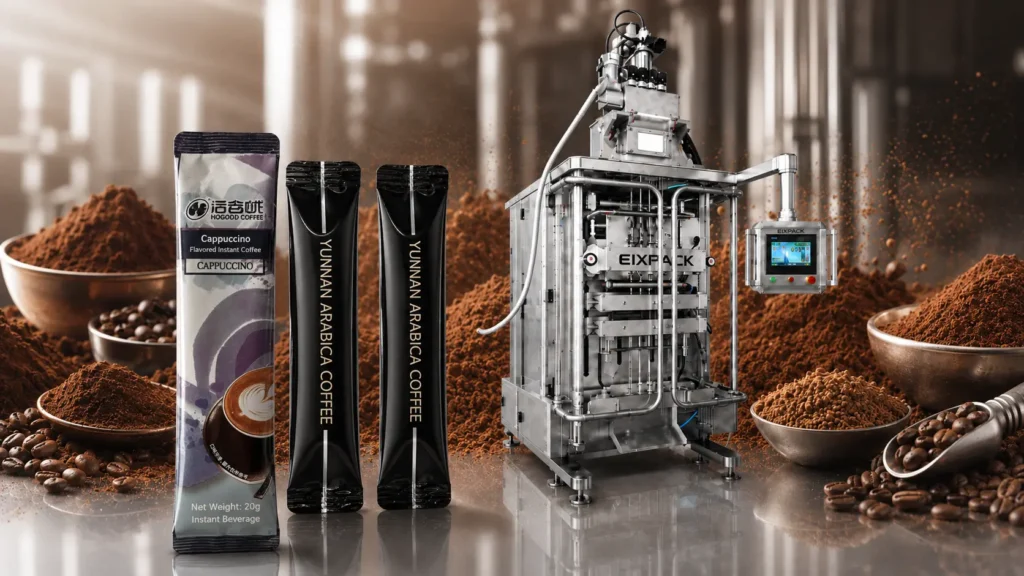
Contract packers do not buy coffee stick pack packaging machines for one simple product.
They need a line that can handle multiple brands, different coffee formulas, frequent SKU changeovers, strict weight control, clean sealing, readable coding, and retail-ready cartons.
A machine that works for one instant coffee powder may need different settings or parts for 2-in-1 coffee mix, 3-in-1 instant coffee mix, cappuccino powder, or collagen coffee powder.
For this reason, contract packers should evaluate a coffee stick pack machine as a production solution, not only as a filling and sealing machine.
The real question is not “How fast can the machine run?” but “How many accepted sticks can it produce across different formulas, pack sizes, films, and carton formats with controlled downtime?”
EIXPACK’s coffee stick pack machine solutions can be discussed around this type of multi-SKU contract packaging requirement.
Why contract packers need a different coffee stick pack solution
A coffee brand may run one formula for months. A contract packer may run several formulas in one week. One customer may need plain instant coffee powder.
Another may need 3-in-1 coffee with sugar and creamer. A third may request cappuccino powder in a wider stick with a retail carton. Each product changes the way the machine should dose, seal, code, discharge, and connect with downstream equipment.
This makes flexibility more important than catalog speed alone. Contract packers should look at powder compatibility, lane count, forming parts, changeover time, cleaning access, recipe settings, coding changes, carton size changes, and documentation requirements.
A lower-cost machine may become expensive if it creates long changeovers, unstable seals, inaccurate filling, or manual bottlenecks at the cartoning stage.
Handling multiple coffee formulas on one line
Plain instant coffee powder is usually more predictable because the powder is more uniform. It still needs moisture protection and aroma barrier performance, but dosing is often easier.
A 2-in-1 instant coffee mix adds sugar or creamer, so the line must reduce ingredient separation during feeding and filling.
A 3-in-1 instant coffee mix adds coffee, sugar, and creamer in one serving, which increases the risk of dust, settling, bridging, and inconsistent taste per stick.
Cappuccino powder can be more challenging because it may contain foaming ingredients and low-density powders.
The net weight may look similar to other coffee products, but the required filling volume can be larger.
For contract packers, cappuccino stick pack packaging machines should be evaluated by fill volume, hopper behavior, dust control, sealing cleanliness, and finished stick shape, not only by grams per stick.
If the same line will also pack cocoa powder, collagen powder, protein powder, or nutraceutical beverage powder, the supplier should review product flowability, bulk density, dust level, cleaning requirements, and flavor carryover risk.
These details affect auger design, hopper configuration, stainless steel contact parts, dust control, and changeover procedures.
Managing stick size, bag style, and SKU changeovers
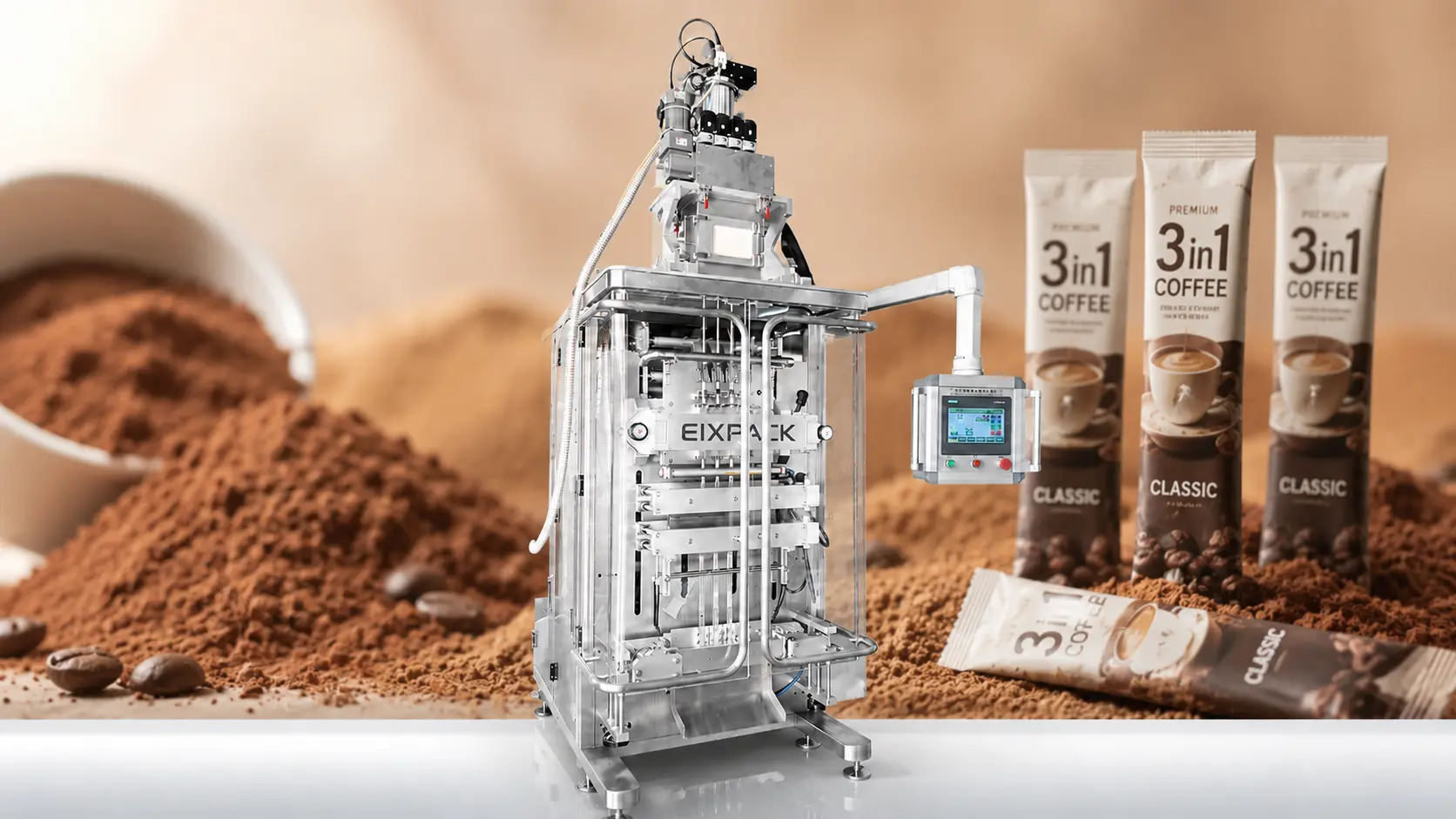
For EIXPACK coffee stick pack machine projects, the target packaging range can cover 5–30 g per stick, 3–7 cm stick width, and 10–15 cm stick length, depending on the project.
Available pack styles may include easy tear notch, round corner, shaped pack, back seal, three-side seal, and four-side seal. These options are useful for contract packers because different brand customers often request different retail presentations.
However, every pack style affects production. A shaped pack may improve shelf appeal but require more complex cutting. A notch improves consumer opening but must not weaken the stick during transport.
A wider cappuccino stick may run differently from a narrow instant coffee stick. Contract packers should request sample packs for each important SKU before approving the final machine and forming parts.
Changeover should be part of the buying discussion. A contract packer may need to change powder, film roll, pack length, printing code, carton size, and customer batch information.
The machine should support clear operator settings, accessible cleaning areas, and practical adjustment procedures.
A high-speed machine with difficult changeover can become a bottleneck in a multi-client packaging facility.
Auger dosing, dust control, and sealing for mixed coffee powders
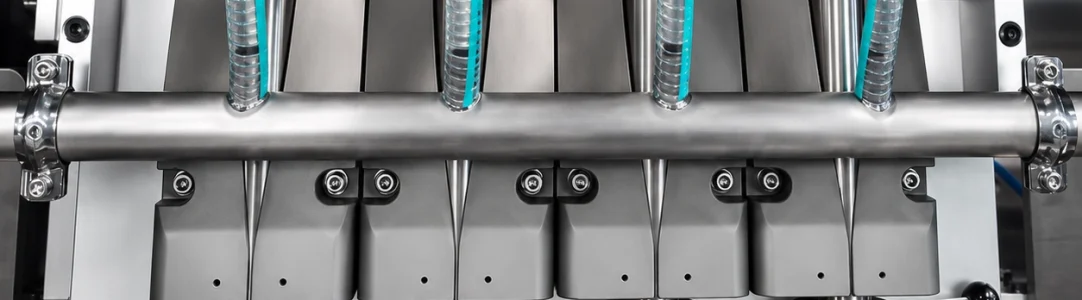
Auger dosing is commonly used for coffee powder and blended beverage powder because it can meter fine powders through controlled screw rotation.
For 2-in-1 and 3-in-1 instant coffee mix stick pack packaging machines, the auger system should be reviewed together with hopper agitation, powder feeding stability, anti-static support, and dust control.
The goal is not only accurate weight, but also stable product flow across multiple lanes.
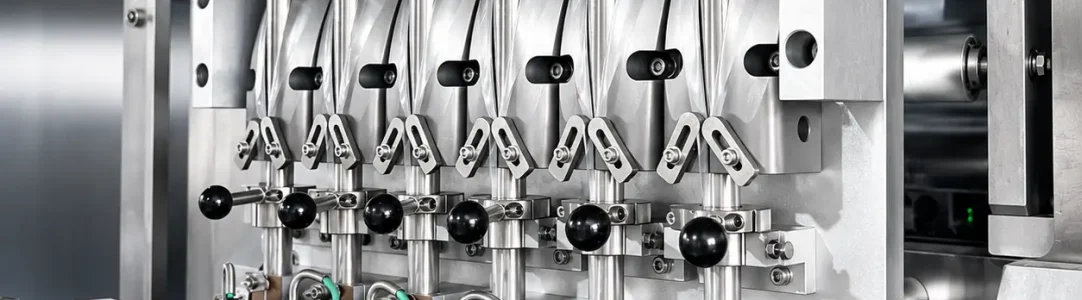
Dust control is especially important for contract packers because they may run powders with different dust levels. Coffee powder, creamer, cocoa powder, and protein powder can behave very differently.
If powder enters the seal area, the stick may leak, burst during transport, or fail retailer inspection. Useful features include dust control design, stable sealing temperature, servo film pulling, automatic film tracking, and cleanable contact areas.
In recent EIXPACK coffee powder sample testing, different coffee powder formulas reached a filling deviation within ±0.5 g under tested conditions.
EIXPACK sample testing also reached a seal qualification rate of 99.95% under tested conditions. These results should be treated as tested sample performance, not as a universal guarantee for every formula, film, humidity level, or production environment.
For a new contract packaging project, EIXPACK recommends testing the buyer’s actual powder and selected film before confirming the final lane count, auger setup, sealing temperature, dust control design, and cartoning connection.
A test video can help the brand owner, contract packer, engineering team, and quality team review powder feeding, filling, sealing, cutting, coding, and finished stick discharge before approval.
Measure productivity by accepted output, not catalog speed
For contract packers, accepted output matters more than mechanical speed.
A 6-lane EIXPACK coffee stick pack machine configuration can reach up to 180 sticks per minute under suitable conditions, but the real production value depends on how many finished sticks pass weight, seal, coding, appearance, and carton loading checks.
If one lane has unstable film tracking or seal contamination, the entire line can lose efficiency.
This is why contract packers should ask for accepted sticks per minute, not only cycles per minute.
They should also review startup waste, film change time, powder changeover time, cleaning time, rejection method, carton changeover, and operator requirements.
A stable line with controlled downtime may produce a lower cost per accepted stick than a faster line that creates frequent rework.
For multi-client production, documentation of test conditions is also useful.
A contract packer can show brand customers how the line performed with specific powders, films, stick sizes, and sealing settings.
This supports project approval and reduces disputes about expected performance after installation.
Why automatic cartoning matters for contract packers
Many coffee stick pack projects do not end at the stick pack. Contract packers often supply retail cartons, multipacks, export cartons, and promotional packs.
If the stick pack machine is not planned for downstream automation, manual counting and boxing can become the slowest and most error-prone part of the process.
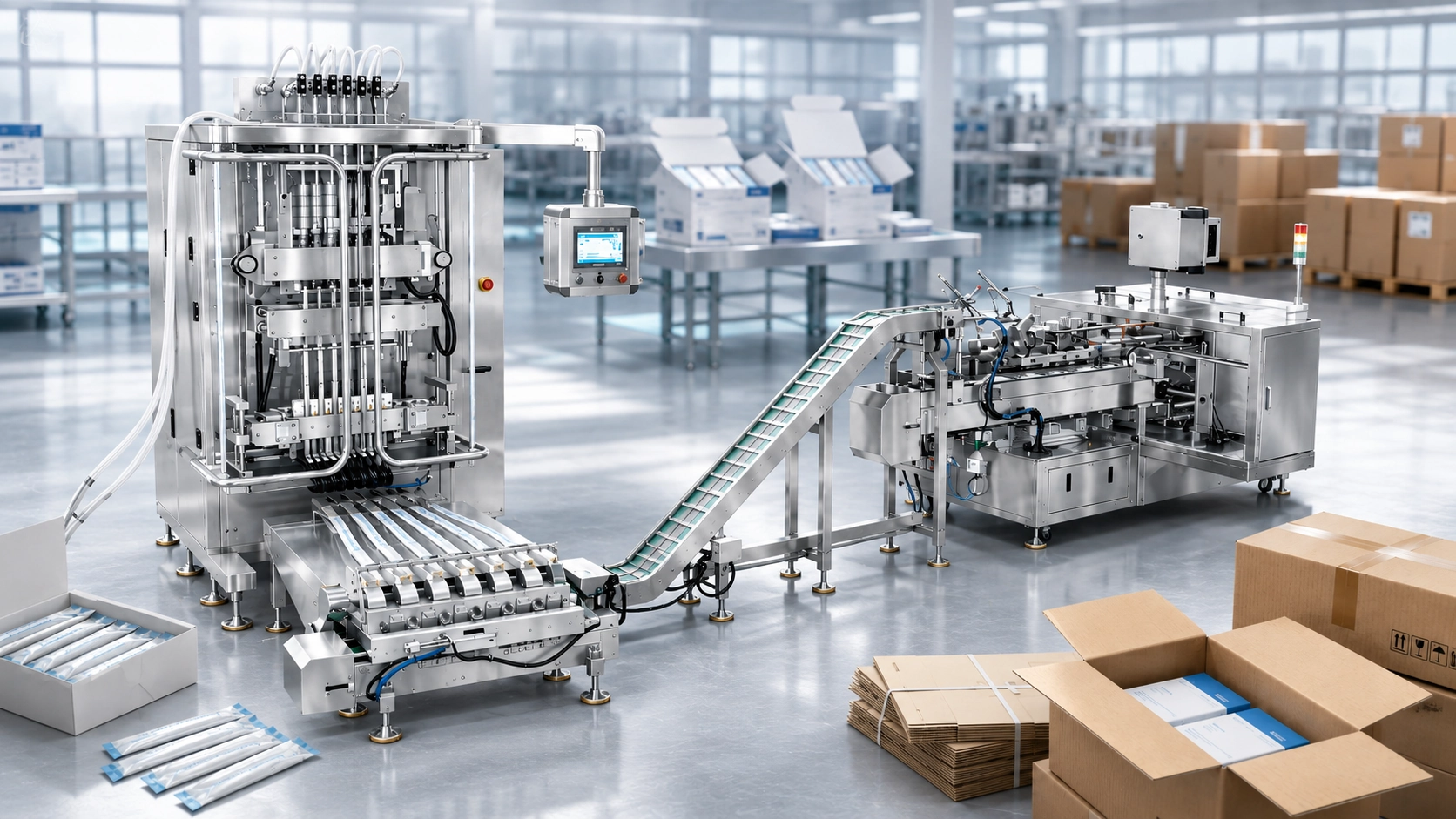
A stick packing plus cartoning line should be designed as one system.
The stick discharge direction, conveyor height, counting method, carton size, coding position, reject method, and operator access should be reviewed together.
For U.S. and Italian retail channels, consistent carton count, readable date code, clean stick appearance, and carton-ready discharge can reduce customer complaints and labor cost.
EIXPACK can discuss automatic cartoning connection for powder stick pack machine projects, including downstream conveying and retail-ready packaging layouts.
A related EIXPACK custom powder stick pack project for milk tea powder used a multi-lane powder stick pack system with a reserved interface for future cartoning connection, which is a practical planning approach for growing contract packers.
Film selection for contract packaging projects
Coffee sticks need packaging film that protects aroma, resists moisture, seals cleanly, and fits the brand’s market claims. PET/AL/PE and PET/VMPET/PE are common high-barrier options for coffee and beverage powder sticks.
Paper-based laminate, recyclable mono-material film, and compostable film may support sustainability goals, but they should be tested because stiffness, heat sealing range, oxygen barrier, moisture barrier, and machinability can differ from conventional laminates.
Contract packers should not approve a film based only on appearance or customer preference.
The film should be tested for sealing performance, print registration, cutting quality, finished stick shape, and carton fit. A film that supports a brand’s sustainability claim may still create sealing issues if it has a narrow heat sealing window.
A high-barrier film may protect coffee well but may not match a recyclability claim.
For U.S. launches, brand owners and contract packers should review the FDA Food Labeling Guide and final packaged food requirements.
For Italy and the wider EU market, they should verify food-contact material documentation, traceability, and packaging claims under EU food contact materials legislation.
The film supplier, brand owner, contract packer, and local compliance team should confirm their responsibilities before commercial production.
Contract packer configuration guide
Contract packing need |
Production risk |
Configuration focus |
What to confirm with EIXPACK |
|---|---|---|---|
Multiple coffee formulas | Ingredient separation, dust, inconsistent taste | Auger dosing, high-barrier film, stable sealing | Test each important formula before final layout |
Frequent SKU changeovers | Downtime, wrong code, cleaning delay | Clear recipe settings, accessible contact parts, practical adjustment | Share product list, pack sizes, and changeover expectations |
Retail carton supply | Counting errors, carton jams, labor cost | Stick discharge, counting, conveying, automatic cartoning | Plan the stick pack machine and cartoning system together |
3-in-1 coffee mix | Creamer dust, sugar settling, seal contamination | Dust control, stable feeding, clean sealing area | Confirm powder behavior and seal qualification through testing |
Cappuccino powder | Low density, larger filling volume | Larger stick volume, suitable hopper design, sealing test | Evaluate fill volume and finished stick shape |
U.S. or Italy export | Documentation gaps, packaging claim risks | Machine documents, film documents, labeling review | Confirm CE, ISO-related information, GMP-related design, and local compliance needs |
What contract packers should prepare before requesting a proposal
Before requesting a proposal, prepare a technical brief for each major SKU.
Include formula type, target grams per stick, stick width and length, bag style, film structure, required output, coding information, carton format, cleaning frequency, and expected changeover frequency.
If the customer has specific documentation requirements, include them at the beginning of the project.
A clear brief helps EIXPACK review the right lane count, auger filling system, dust control design, film path, sealing system, discharge method, and automatic cartoning connection.
It also helps prevent a common contract packaging mistake: choosing a machine based only on price and speed, then discovering that the customer’s formulas, films, or carton formats require a different line design.
Before sending a final request, review EIXPACK’s coffee stick pack packaging machines page and prepare your formula list, target grams per stick, stick sizes, film plans, output goals, carton formats, and documentation requirements.
This will make the technical discussion more accurate and reduce back-and-forth during quotation.
Final buying advice
Industrial coffee stick pack packaging machines for contract packers should be selected by flexibility, accepted output, clean sealing, changeover efficiency, film compatibility, documentation readiness, and downstream automation.
The strongest line is not always the fastest line. It is the line that can run different coffee formulas, control powder behavior, protect seal quality, support retail cartons, and help the contract packer serve multiple customers with fewer delays and fewer disputes.
For instant coffee powder, 2-in-1 coffee mix, 3-in-1 instant coffee mix, cappuccino powder, and nutraceutical beverage powders, EIXPACK can help review product behavior, auger dosing, dust control, film compatibility, stick dimensions, sample testing, seal performance, and automatic cartoning connection.
Share your formula list, target grams per stick, stick sizes, film plans, output goals, carton formats, and documentation needs with EIXPACK to discuss a practical coffee stick pack packaging machines configuration for contract packaging.
Frequently Asked Questions (FAQ)
Contract packers should look for a flexible coffee stick pack machine that supports multiple formulas, practical changeovers, auger dosing, dust control, clean sealing, date coding, and downstream cartoning connection. The final configuration should be confirmed through sample testing.
It may be possible if the auger system, hopper design, forming parts, sealing system, and cleaning process are configured correctly. Each formula should be tested because flowability, density, filling volume, dust level, and ingredient separation can differ.
Contract packers are paid for finished, accepted products, not empty machine cycles. Accepted output reflects real production performance after weight checks, seal checks, coding checks, appearance checks, and carton loading.
In recent sample testing, different coffee powder formulas reached a filling deviation within ±0.5 g under tested conditions. Final accuracy should be confirmed with the buyer’s actual powder, target stick weight, film, and production environment.
Automatic cartoning should be considered when the project requires retail cartons, multipacks, export cartons, high counting consistency, or reduced manual labor. The stick pack machine and cartoning system should be planned together from the beginning.
They may need machine specifications, electrical documentation, test videos, sample test records, CE documentation, ISO-related quality management information, GMP-related design considerations, food-contact packaging material documents, and customer-specific quality records.
Quick Quote Request
If you are planning an coffee powder stick pack machine project, prepare your powder sample, target fill weight, bag width, bag length, rollstock film structure, target speed, date coding needs, inspection requirements, and cartoning plan.
EIXPACK can review these details and recommend a practical startup configuration for instant coffee powder, 2-in-1 coffee mix, 3-in-1 instant coffee mix, cappuccino powder, and nutraceutical beverage powders