
What Is a Stick Pack Machine?
A stick pack machine is an automated vertical form-fill-seal system that turns rollstock film into slim, single-serve packs.
The machine unwinds film, controls film tension, divides the film into lanes, forms each lane around a tube, fills each stick with a measured amount of product, seals the pack, cuts it, and discharges the finished stick packs for collection or downstream packaging.
The stick pack format is widely used for nutraceutical, pharmaceutical, food, personal care, and contract manufacturing products because it is compact, portable, and easy to dose. Common products include collagen powder, protein powder, instant coffee, electrolyte powder, liquid supplements, syrups, sauces, cosmetic gels, medical gels, and pharmaceutical gel products.
For buyers, the important point is that a stick pack machine is not selected only by appearance. A powder stick pack machine, a stick pack machine for liquids, and pharmaceutical gel stick pack packaging machines may share the same general forming and sealing logic, but they need different filling systems, product-contact parts, cleaning methods, and documentation support.
How Do Stick Pack Machines Work Step by Step?
A stick pack machine works through a continuous sequence of film handling, forming, filling, sealing, cutting, and discharge. Each step affects final pack quality. If film tension is unstable, the pack may wrinkle. If dosing is unstable, the finished stick may be underfilled or overfilled. If the sealing area is contaminated by powder or liquid, the pack may leak.
1. Film Unwinding and Tension Control
The process starts with a roll of packaging film. The machine unwinds the film and guides it through rollers that help keep the film aligned and under consistent tension. Good tension control is important because stick packs are narrow, and small film movement can affect printing position, seal alignment, and finished pack shape.
2. Printing and Eye Mark Registration
If the packaging requires date coding, lot coding, or printed design registration, the machine can use sensors to read eye marks on the film. This helps align the printed design with the horizontal seal and cutting position. For pharmaceutical and contract manufacturing projects, coding accuracy also supports batch identification and traceability.
3. Film Slitting and Lane Separation
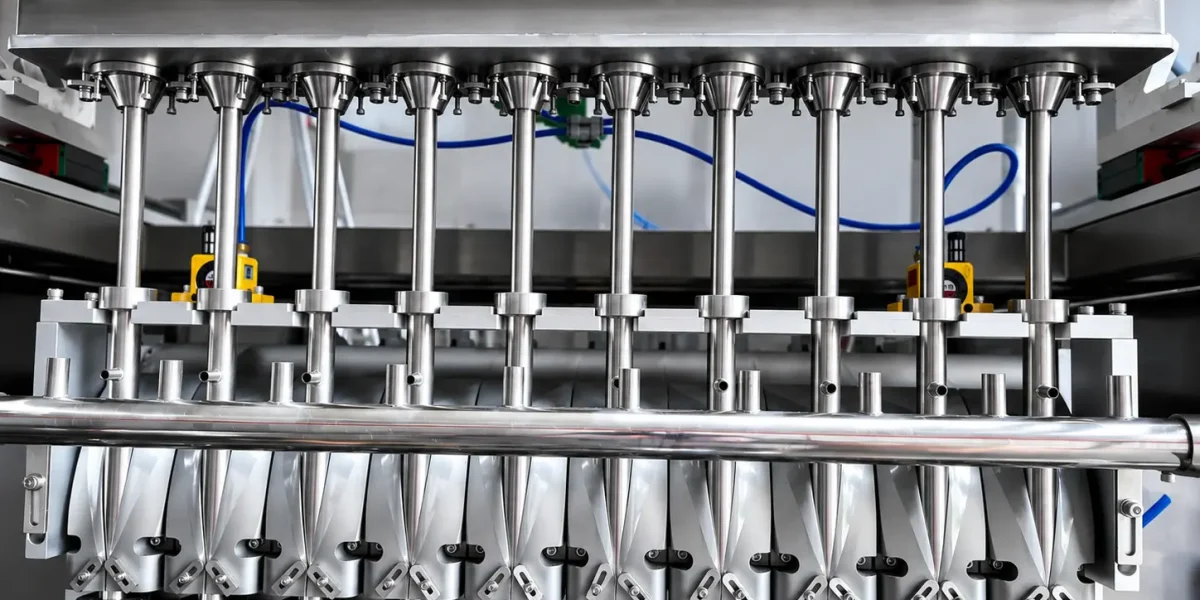
After the film is controlled and registered, it is slit into multiple lanes. Each lane will become one stick pack. Multi-lane design is what allows stick pack machines to reach higher output in a compact footprint. EIXPACK stick pack machines can be configured with 2 to 12 lanes, depending on product type, stick size, target speed, and filling system.
4. Stick Pack Forming
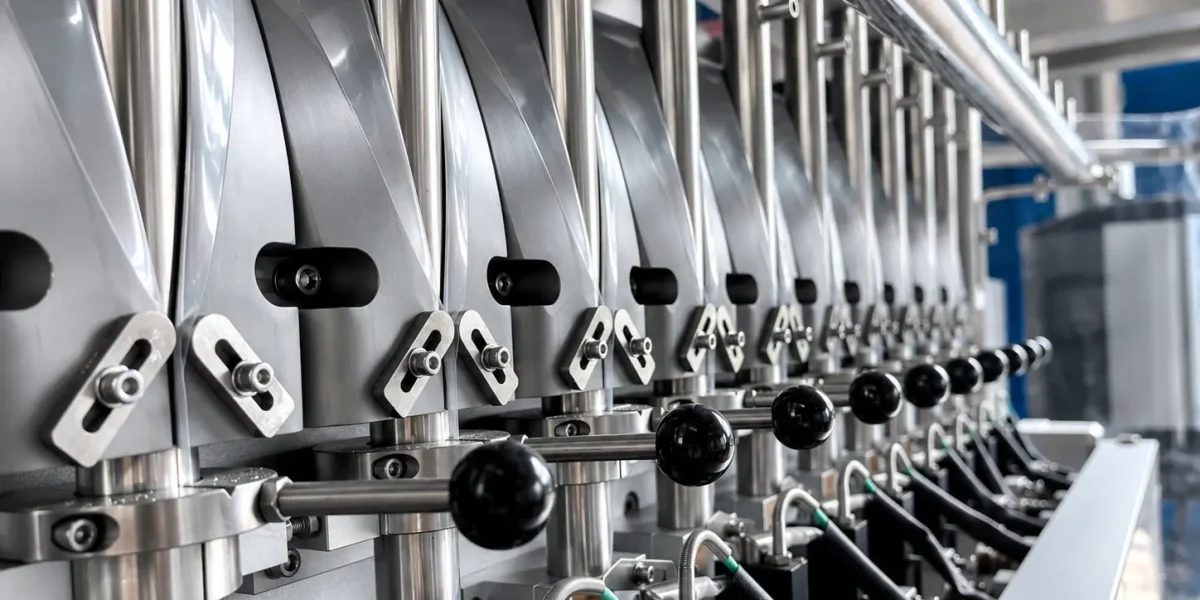
Each film lane is guided around a forming tube. The film edges are brought together to create the narrow stick shape. The machine may use different seal styles depending on the packaging design, film structure, product requirement, and brand preference. Consistent forming is especially important for slim stick packs because poor alignment can cause seal defects or an uneven appearance.
5. Product Filling
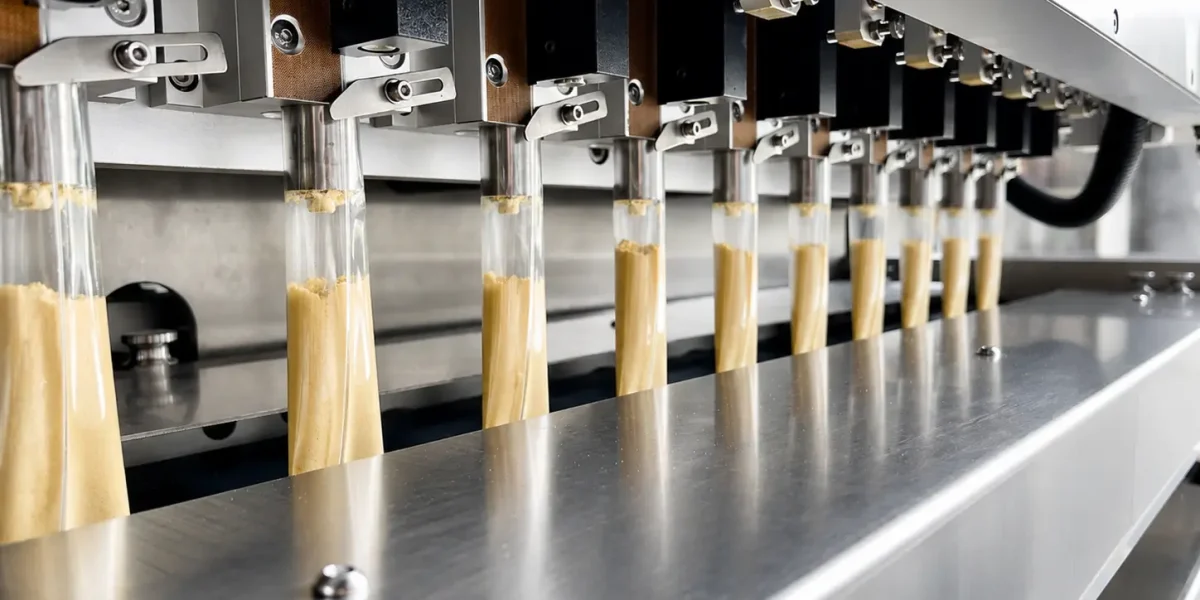
Once the stick shape is formed, the filling system doses product into each lane. This is the point where machine configuration becomes very product-specific. A powder stick pack machine often uses auger dosing. A stick pack machine for liquids may use piston, peristaltic, or rotor pump filling. Gel applications require a filling path that can handle viscosity without creating dripping, stringing, or difficult-to-clean dead zones.
6. Vertical and Horizontal Sealing
After filling, the machine seals the stick pack. Vertical sealing closes the long side of the pack, while horizontal sealing creates the top and bottom seals. Seal quality depends on temperature, pressure, dwell time, film structure, product contamination, and machine stability.
For powder products, dust near the sealing area can weaken the seal. For liquids and gels, dripping or product splash can contaminate the seal area. This is why the filling system and sealing area must be designed together, not treated as separate parts.
7. Cutting and Discharge
After sealing, the machine cuts the continuous web into individual stick packs. Finished packs are discharged into a chute, conveyor, or downstream equipment such as checkweighing, cartoning, counting, or case packing systems. For high-volume operations, clean discharge is important because misaligned packs can slow down downstream automation.
How Powder Stick Pack Machines Work
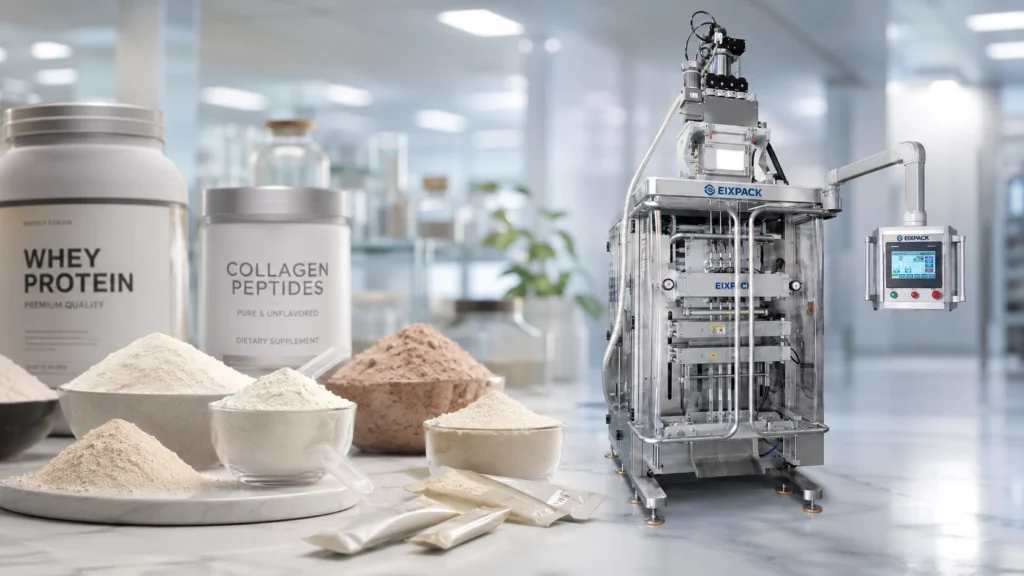
A powder stick pack machine must do more than drop powder into a narrow pouch. It must control powder flow, reduce dust, maintain dosing accuracy, and keep the sealing area clean. Products such as collagen powder, protein powder, powdered supplements, instant drinks, and pharmaceutical powders can behave very differently during filling.
EIXPACK powder stick pack machines can be configured with dust-proof design, auger dosing, servo control, and a dust collection interface. These features are useful when the product is dusty, high-value, hygroscopic, or sensitive to dosing variation. A dust collection interface also helps reduce airborne powder around the filling and sealing area.
For nutraceutical brands, powder packaging often involves high-value ingredients. A small dosing deviation can create cost loss over long production runs. For contract manufacturers, the bigger concern may be flexibility: one production line may need to run multiple powders with different bulk densities, flow properties, and cleaning requirements.
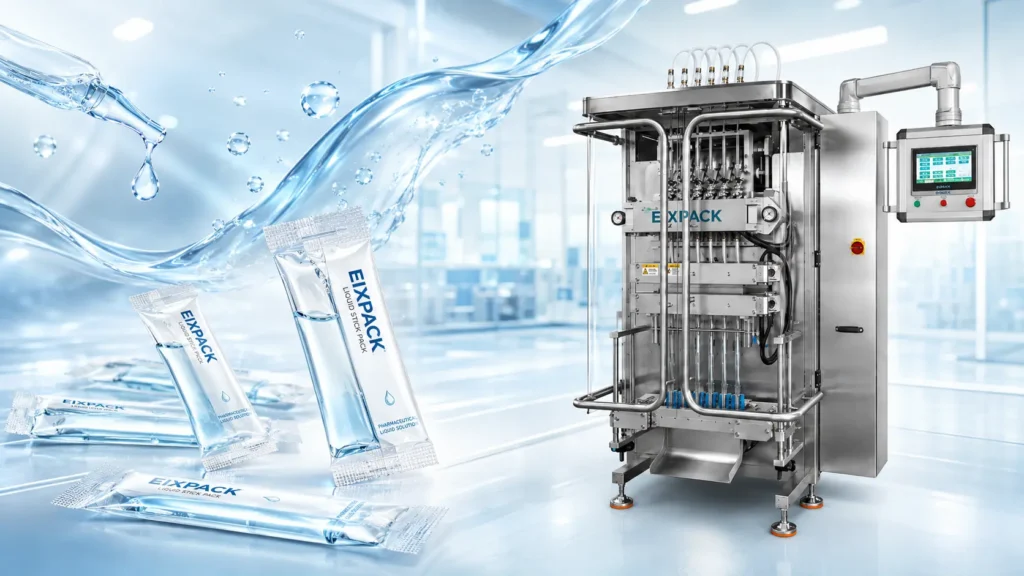
A stick pack machine for liquids uses pump-based filling rather than powder dosing. The filling system must match the product’s viscosity, flow behavior, foaming tendency, and cleaning requirement. A thin oral liquid, a syrup, an oil, and a gel may all require different pump settings or even different pump types.
EIXPACK liquid and gel stick pack machines can support piston pumps, peristaltic pumps, and rotor pumps. Piston pumps are often used for accurate volume dosing across many liquid products. Peristaltic pumps can be useful when the product path needs to stay inside tubing. Rotor pumps may be considered for certain viscous or continuous-flow applications.
For liquid and gel products, the most common production problems are dripping, seal contamination, stringing, inconsistent fill volume, and difficult cleaning. Before choosing a machine, buyers should share the actual product sample, target fill volume, viscosity, temperature requirement, pack size, and film structure.
Pharmaceutical Gel Stick Pack Packaging Machines
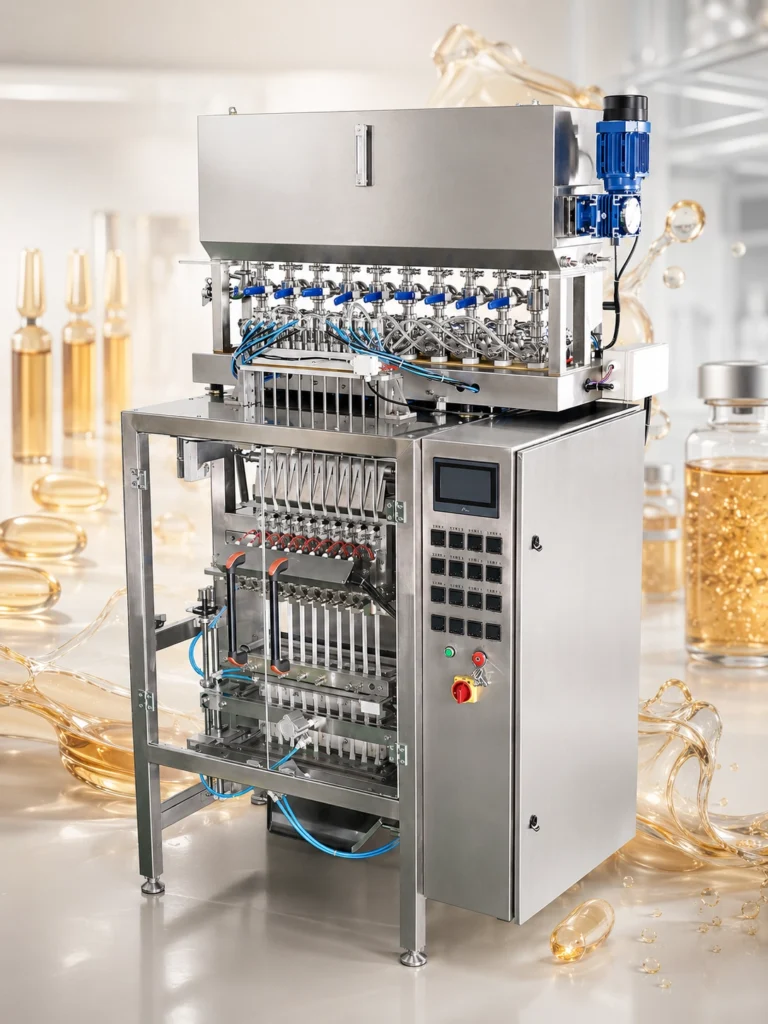
Pharmaceutical gel stick pack packaging machines require more attention to hygiene, documentation, cleaning, and quality control than standard food or cosmetic applications. The machine must not only fill and seal accurately; it must also support a process that the buyer can document, validate, and repeat.
EIXPACK stick pack machines comply with CE certification requirements and can support GMP, IQ, OQ, PQ, and 21 CFR Part 11 requirements when needed for regulated production. For pharmaceutical companies and contract manufacturers, this matters because equipment documentation is often part of the purchase decision. It should be discussed before machine design is finalized, not after installation.
For U.S.-market pharmaceutical projects, buyers should also align with their internal quality team. FDA 21 CFR Part 211 covers current good manufacturing practice for finished pharmaceuticals, including equipment design, cleaning, maintenance, automatic/mechanical/electronic equipment, and packaging control requirements.
When electronic records, audit trails, access control, or electronic signatures are part of the packaging process, 21 CFR Part 11 should also be considered. This is especially relevant for regulated facilities that need data integrity, repeatable batch records, and validation-ready documentation.
Comparison Table: Powder, Liquid, and Pharmaceutical Gel Applications
Application |
Typical Filling System |
EIXPACK Configuration Focus |
Main Risk to Control |
Best-Fit Buyer |
|---|---|---|---|---|
Powder stick pack machine | Auger dosing | Dust-proof design, servo control, dust collection interface, ±0.5% accuracy | Dust, poor flow, dosing variation, seal contamination | Nutraceutical brands, powder supplement brands, contract manufacturers |
Stick pack machine for liquids | Piston, peristaltic, or rotor pump | Pump selection based on viscosity, 60–480 packs/min, 2–12 lanes | Dripping, foaming, seal contamination, inconsistent fill | Liquid supplement brands, food brands, personal care brands |
Pharmaceutical gel stick pack packaging machines | Hygienic pump configuration | CE compliance, GMP, IQ, OQ, PQ, 21 CFR Part 11 support, cleanable product path | Documentation gaps, cleaning difficulty, batch control issues | Pharmaceutical companies, medical gel producers, regulated contract manufacturers |
Key Factors Buyers Should Check Before Choosing a Machine
- The first factor is the product itself. Buyers should prepare real samples, not just a product name. Powder flowability, liquid viscosity, gel texture, moisture sensitivity, temperature behavior, and foaming tendency all affect machine configuration.
- The second factor is pack format. For EIXPACK projects, the single-pack width range can cover 10–60 cm, and pack length can be configured based on filling volume and packaging format. Buyers should confirm width, length, tear notch design, film structure, and downstream packaging requirements before finalizing the machine.
- The third factor is target output. A machine with 2 lanes and a machine with 12 lanes are very different investments. Higher lane counts can increase production capacity, but they also require stronger control of filling consistency, film tracking, sealing stability, and operator training.
- The fourth factor is film compatibility. EIXPACK stick pack machines are compatible with a wide range of packaging film structures, but real production film should still be tested. Different films may behave differently during forming, sealing, cutting, storage, and transportation.
- The fifth factor is compliance. Nutraceutical brands may care about hygiene, efficiency, and flexible packaging sizes. Pharmaceutical companies may need GMP-oriented documentation, IQ, OQ, PQ, 21 CFR Part 11 support, batch control, and quality-team review. Contract manufacturers often need both flexibility and documentation because they serve multiple customers.
- The sixth factor is safety. Packaging machines include moving parts, sealing jaws, cutting units, and rollers. OSHA machine guarding requirements are a useful reference for understanding why access protection and operator safety should be considered during equipment selection.
Common Mistakes to Avoid
- The first mistake is choosing by maximum speed only. Speed is useful only when the machine can maintain stable filling accuracy, seal integrity, and uptime with the actual product. A difficult powder or viscous gel may run slower than a simple free-flowing product.
- The second mistake is ignoring the filling system. A powder stick pack machine and a stick pack machine for liquids should not be treated as the same project. Powder may require auger dosing and dust control, while liquids and gels require pump selection, anti-drip design, and cleaning review.
- The third mistake is delaying documentation discussions. For pharmaceutical and contract manufacturing projects, CE, GMP, IQ, OQ, PQ, cleaning procedures, validation-related documents, and 21 CFR Part 11 requirements should be discussed early. If documentation is checked only after purchase, the project may face delays.
- The fourth mistake is not testing the real product and film. A machine may run perfectly with demonstration materials but behave differently with your actual powder, liquid, gel, or film structure. Testing helps confirm dosing stability, seal quality, discharge behavior, cutting performance, and cleaning needs before finalizing the configuration.
Why EIXPACK for Stick Pack Machine Projects
EIXPACK is a practical option for buyers who want to select stick pack machines by product application. Instead of forcing every project into a fixed model name, EIXPACK can match the machine configuration to powder, liquid, gel, or pharmaceutical gel products.
For powder projects, EIXPACK can support dust-proof design, auger dosing, servo control, and a dust collection interface. For liquid and gel projects, EIXPACK can support piston pumps, peristaltic pumps, and rotor pumps. Across stick pack projects, the confirmed configuration range includes ±0.5% filling accuracy, 60–480 packs per minute, 2–12 lanes, 10–60 cm single-pack width coverage, flexible pack length configuration, broad film compatibility, CE compliance, and support for GMP, IQ, OQ, PQ, and 21 CFR Part 11 requirements.
For nutraceutical brands, this can support efficient single-serve supplement packaging. For pharmaceutical companies, documentation support can help align equipment decisions with quality expectations. For contract manufacturers, the ability to configure the machine by material application can make the line more adaptable across different customer projects.
A practical next step is to send EIXPACK your product sample, target fill weight or volume, stick width and length, film requirement, speed target, lane expectation, and compliance needs. With this information, the team can recommend a machine configuration based on your actual production conditions.
Frequently Asked Questions (FAQ)
A stick pack machine is an automated packaging machine that forms narrow single-serve packs from rollstock film, fills them with powder, liquid, gel, or semi-solid products, seals them, and cuts them into finished sticks.
A stick pack machine unwinds film, controls tension, divides the film into lanes, forms each lane into a stick shape, fills the product, seals the pack, cuts it, and discharges finished stick packs.
A powder stick pack machine usually uses auger dosing and dust-control features, while a liquid stick pack machine uses pump-based filling systems such as piston, peristaltic, or rotor pumps.
One machine platform may be configurable for different product types, but powder and liquid usually require different filling systems, product-contact parts, and cleaning designs. Buyers should confirm the configuration with real product samples.
Pharmaceutical buyers should check hygiene design, cleanability, product-contact materials, CE, GMP, IQ, OQ, PQ, 21 CFR Part 11 support, batch control, documentation, and whether the machine can support their internal quality process.
Based on the confirmed specifications, EIXPACK stick pack machines can run from 60 to 480 packs per minute, depending on lane count, product type, fill volume, film structure, pack size, and machine configuration.
Request a Quote
Looking for a stick pack machine for powder, liquid, or pharmaceutical gel products?
Share your product sample, target fill weight or volume, stick width and length, film requirement, speed target, lane expectation, and compliance needs with EIXPACK.
Our team can help you evaluate the right machine configuration for nutraceutical, pharmaceutical, or contract manufacturing production.