
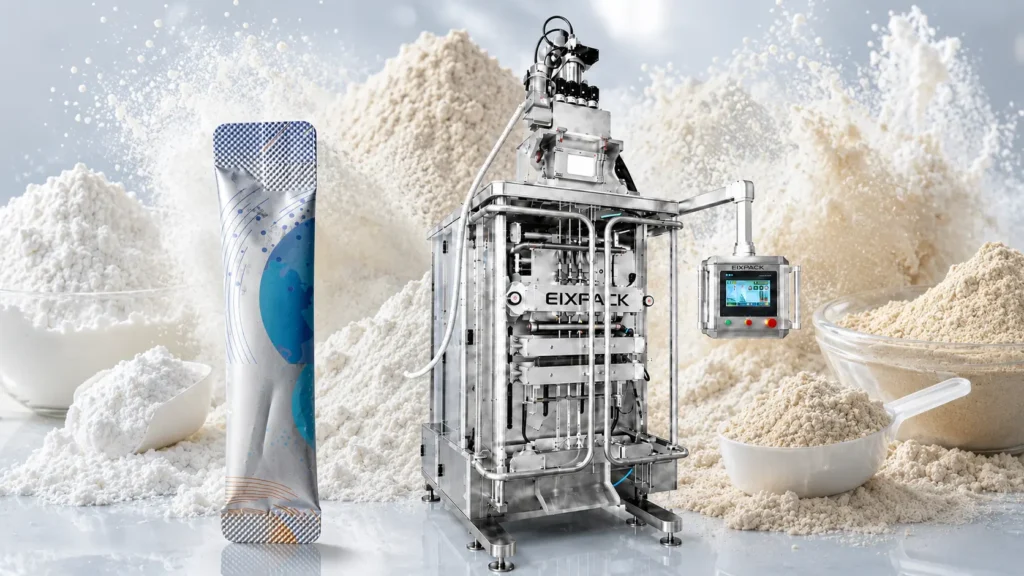
A startup choosing an electrolyte powder stick pack machine is usually trying to solve three problems at the same time: launch small, pack consistently, and avoid buying equipment that becomes obsolete after the first growth stage.
Electrolyte powder can be fine, hygroscopic, dusty, flavored, colored, and density-sensitive. A machine that works well for sugar may not handle magnesium blends, vitamin mixes, or sports hydration formulas with the same stability.
For brands comparing a powder stick pack machine with manual filling, preformed pouch packing, or co-packing, the key question is not “How fast can it run?” The better question is: “Can this line fill my powder accurately, seal my film reliably, clean quickly between flavors, and scale when orders increase?”
Why Electrolyte Powder Is Harder to Pack Than It Looks
Electrolyte powders are usually single-serve products, so small dosing errors become visible across thousands of sticks.
A 2.6g sample stick and a 16g hydration stick do not behave the same in the auger, hopper, forming tube, or seal area. Bulk density, particle size, added flavors, anti-caking agents, and humidity all affect filling stability.
The most common startup problems are overfill giveaway, underweight rejects, powder trapped in the seal, film wrinkles, static cling, and slow cleaning after flavor changes.
If the equipment is not specified around the actual formulation, the first production run may require long adjustment time, extra operators, and unnecessary film waste.
How an Electrolyte Powder Stick Pack Machine Works
A stick pack machine forms narrow packs from rollstock film, doses powder into each lane, seals the pack longitudinally and transversely, cuts the finished sticks, and sends them to collection or downstream packaging.
For electrolyte powder, auger filling is commonly used because it can meter small powder portions with controlled rotation.
In practical terms, the machine must synchronize film pulling, auger dosing, heat sealing, cutting, coding, and rejection or counting.
If one function is unstable, the whole line suffers. For example, a good auger cannot compensate for poor film sealing, and a high-speed sealing jaw cannot fix powder dust sitting inside the seal area.
Startup Specifications That Matter
For eixpack electrolyte powder projects, the confirmed specification window includes 2.6g–16g fill weight, 20–35mm bag width, 75–165mm bag length, and 40–800 sticks/min depending on final configuration.
This range is useful for startups because it can support trial packs, standard hydration sticks, and higher-volume retail production, but the exact speed must be validated with the real powder and film.
Startups should also define what “success” means before requesting a quotation.
A nutraceutical brand may care most about retail appearance and low giveaway.
A pharmaceutical company may focus on documentation, cleaning, and batch control.
A contract manufacturer may need faster changeover across protein powder, vitamin powder, food supplement powder, and electrolyte powder.
Practical Configuration Guide for Startup Buyers
Startup situation |
Recommended machine focus |
Helpful configuration |
Risk to check before ordering |
|---|---|---|---|
First retail launch | Stable dosing and clean seals | Auger filling, dust extraction, date printer | Confirm target weight and film seal window |
Multiple flavors | Fast cleaning and changeover | Standard quick-release hopper | Check cleaning SOP and allergen control |
Fine or dusty powder | Seal protection | Suction dust removal system | Test powder carryover into seal area |
Static-prone powder or film | Better powder flow and film handling | Optional static control | Confirm humidity and film behavior |
Contract manufacturing | Flexibility and future automation | Custom speed, Siemens controls, cartoning option | Confirm SKU range and layout space |
Long Screw or Short Screw: Do Not Guess
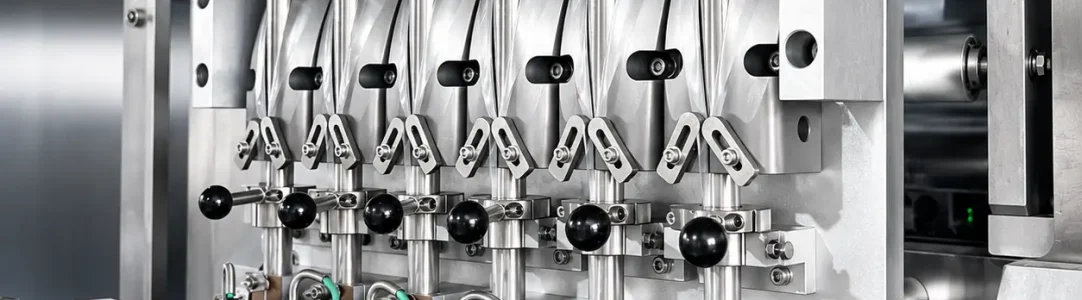
One important eixpack configuration choice is selecting a long screw or short screw according to the powder condition.
A free-flowing, denser powder may need a different auger style than a fluffy, aerated, or sticky vitamin blend.
The wrong screw can cause unstable fills, bridging, tailing, or powder compression.
The safest approach is to send powder samples before finalizing the machine.
The sample test should check target fill weight, repeatability, dust behavior, seal contamination, hopper discharge, and cleaning time.
If the brand has several flavors, the hardest-to-run flavor should be tested first, not the easiest one.
Dust Extraction, Static Control, and Cleanability
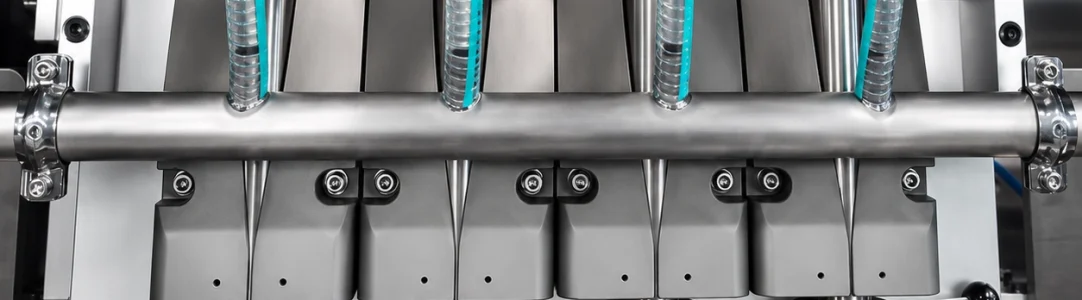
Electrolyte powder dust is not just a housekeeping issue.
Dust can enter the sealing zone, weaken the seal, affect appearance, and increase cleaning work.
A suction dust removal system helps control airborne powder near the filling area, especially for fine mineral or vitamin blends.
Static control should be considered when powder clings to film, forming parts, or sealing surfaces.
It may not be required for every formula, so it is best treated as an option based on real testing.
A standard quick-release hopper is also valuable for startups because cleaning time affects daily production more than many teams expect.
Product-contact parts made from 304 stainless steel are suitable for many food supplement powder stick pack packaging machines, but the final material requirement should be reviewed against your product, cleaning chemicals, and internal quality standards.
U.S. Compliance and Safety Considerations
For U.S. nutraceutical and food supplement projects, equipment selection should support the buyer’s quality system rather than replace it.
Review the FDA dietary supplement cGMP requirements if your product is sold as a dietary supplement, especially around packaging, labeling, records, and batch control.
Film and ink selection also matters. Packaging materials that contact food should be reviewed under FDA food-contact packaging guidance.
The machine supplier can help with film running tests, but the brand or manufacturer should confirm regulatory suitability of the material structure with its packaging supplier.
Powder handling should also consider workplace safety. Some finely divided materials can create combustible dust risks under certain conditions, so buyers should review OSHA combustible dust guidance and complete their own site-level risk assessment.
Do not assume that a dust collector alone solves every safety issue.
Common Mistakes Startups Should Avoid
The first mistake is buying only for today’s pilot volume. A very small system may work during sampling but fail when retailers request larger orders.
The second mistake is buying maximum speed without confirming film stability, powder flow, and operator skill. Speed is useful only when the line remains stable.
The third mistake is ignoring downstream packaging. If operators must manually count sticks into cartons, the main machine may wait for labor even when it can produce faster.
For growing brands, a date printer and future cartoning connection should be discussed early.
The fourth mistake is not sending real product samples.
Electrolyte powder made for a trade show sample may flow differently from the final commercial formula. Colorants, flavors, sweeteners, minerals, and anti-caking agents can all change filling behavior.
Where eixpack Fits
eixpack can support startups by discussing the powder condition, target fill weight, bag width, bag length, film structure, required speed, date coding, dust control, static control, and automation plan before final configuration.
The brand’s project data confirms CE certification, and the machine design can include Siemens controls, 304 stainless steel product-contact parts, a standard quick-release hopper, and downstream cartoning configuration when needed.
For a startup, the best next step is not asking for a generic catalog. It is sending the real product and pack requirements so the engineering team can recommend a practical line.
Use eixpack’s request a technical layout page to share your material specs, pack size, speed target, and automation needs.
Final Purchasing Advice
A good electrolyte powder stick pack machine for startups should be accurate enough for small fills, clean enough for dusty powders, flexible enough for multiple SKUs, and scalable enough for growth.
Choose the machine around your powder, film, pack size, and production plan—not around a speed number alone.
Frequently Asked Questions (FAQ)
The best choice is a configurable auger-based machine that matches your fill weight, bag size, powder flow, film structure, and growth plan. For eixpack projects, the confirmed range can cover 2.6g–16g fills and 40–800 sticks/min depending on configuration and product behavior.
It may be possible, but it depends on powder density, flowability, dust level, flavor changeover, and cleaning requirements. A protein powder stick pack packaging machine setup may need different auger or hopper settings than electrolyte powder.
Dust extraction is strongly recommended for fine or dusty electrolyte powders because powder can contaminate the seal area and increase cleaning work. The final configuration should be confirmed through sample testing.
A machine should not be described as “FDA certified” unless a specific, valid certification exists. For the U.S. market, buyers should review FDA dietary supplement cGMP and food-contact packaging requirements, while confirming documentation with suppliers.
A cartoning machine becomes useful when manual counting and boxing limit output, when retail cartons are required, or when contract manufacturing volumes increase. It is best to discuss future cartoning early so the stick pack line layout can leave enough space.
Quick Quote Request
If you are planning an electrolyte powder stick pack machine project, prepare your powder sample, target fill weight, bag width, bag length, rollstock film structure, target speed, date coding needs, inspection requirements, and cartoning plan.
EIXPACK can review these details and recommend a practical startup configuration for electrolyte powder, vitamin powder, protein powder, or other food supplement powder stick packs.