
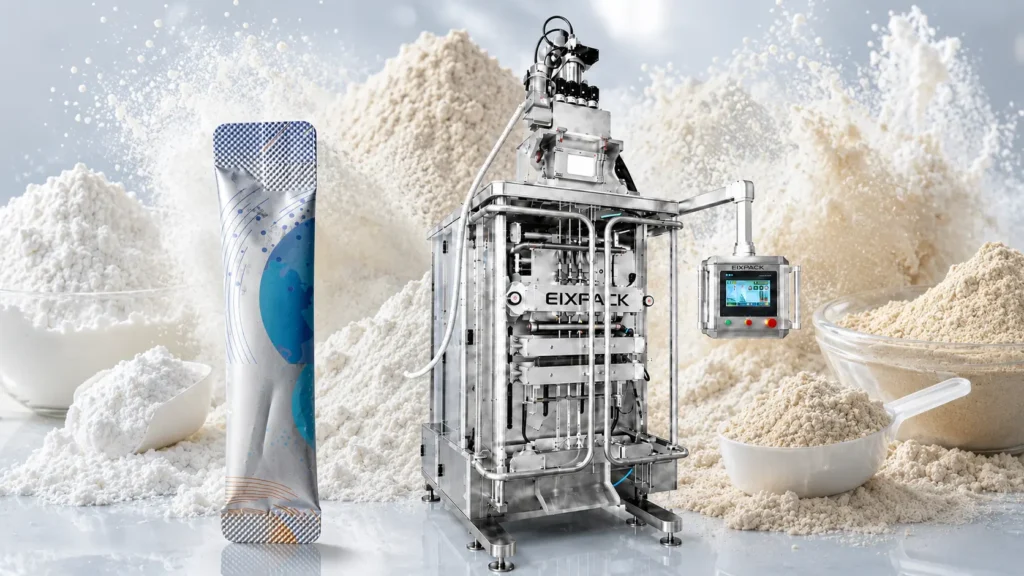
Choosing an electrolyte powder stick pack machine should begin with your formula, target pack size, and production plan, not with the biggest number in a machine brochure.
For U.S. nutraceutical brands, pharmaceutical companies, contract manufacturers, and food brands, the right machine must dose accurately, protect moisture-sensitive powder, control dust, form clean stick packs, and support repeatable production across different SKUs.
A practical buying decision usually comes down to six questions:
- How does the powder flow?
- What is the fill weight?
- What stick width and length do you need?
- What film protects the product?
- How many sticks per minute are required after cleaning and changeover losses?
- What documentation, training, and support will the supplier provide?
This guide explains how to evaluate those questions before you invest in a stick pack machine.
Start with the electrolyte powder, not the catalog model
Electrolyte powder can look simple, but the blend may contain minerals, acids, flavors, sweeteners, colors, and anti-caking agents.
Each ingredient can change flowability, bulk density, static behavior, and dust level. A lemon hydration powder may run smoothly, while a berry formula with a different carrier may bridge in the hopper or contaminate the sealing area with fine dust.
Before comparing prices, send the supplier real samples from your main formula families. Do not test only the easiest SKU.
If you plan to run electrolyte powder, protein powder, collagen powder, or food supplement blends on the same line, the machine configuration must be reviewed against each product group.
A protein powder stick pack packaging machine, for example, may need a different screw length, hopper agitation, and dust control arrangement than a low-dose electrolyte powder line.
For EIXPACK projects, this is where sample-based engineering is more valuable than a general sales quote.
You can start with EIXPACK’s powder stick pack machine page, then share your powder sample, target dose, bag dimensions, film structure, and output requirement for a more accurate configuration review.
Confirm fill weight, stick size, and production capacity
For this electrolyte powder application, the confirmed packaging range is 2.6g–16g per stick, with a bag width of 20–35mm and a bag length of 75–165mm.
This range is suitable for many single-serve hydration powder and supplement powder formats, but each formula still needs testing because powder density can change the real filling volume inside the stick pack.
The confirmed production capacity range is 40–800 sticks per minute.
The right speed depends on lane count, powder behavior, film tracking, seal dwell time, coding, rejection, changeover, and cleaning. A high-speed multi-lane system may be suitable for contract manufacturers running large programs, while a lower-speed configuration may be better for a brand with frequent SKU changes and shorter batches.
Do not select the machine only by the top speed.
Ask for estimated sellable output after film splicing, product changeover, start-stop waste, quality checks, and operator cleaning.
A machine that runs slightly slower but changes over cleanly may produce more finished, saleable packs across a full week.
Match the auger and filling system to powder behavior
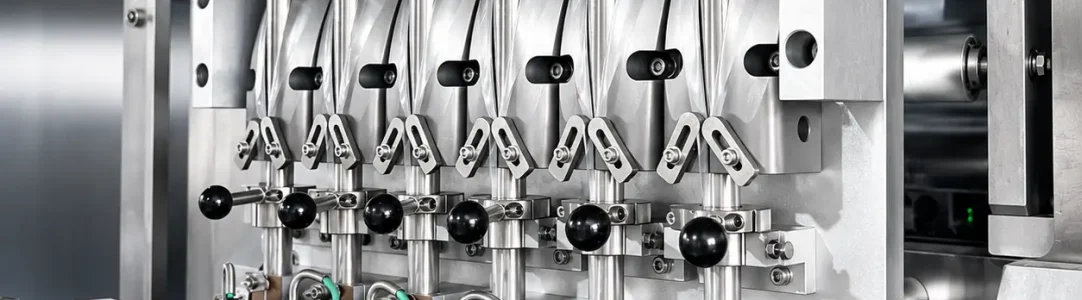
Most electrolyte powder stick pack machines use an auger filling system because it can meter small powder doses into narrow packs.
However, “auger filler” is not specific enough for purchasing. The supplier should help you choose long or short screws based on powder flowability, density, stick size, and target speed.
A short screw may be suitable for certain free-flowing powders or lower-volume formats where response speed is important.
A longer screw may improve control for some higher-volume or less stable powders.
The final decision should be based on powder testing rather than a fixed rule.
Hopper geometry, agitation, filling tube design, servo control, and cut-off timing all affect dosing consistency.
For a powder stick pack filling machine used in nutraceutical production, ask the supplier to test your lowest and highest fill weights.
The test should review average weight, weight variation, powder residue near the seal, reject handling, and film waste during start-up.
If the machine will run premium ingredients, small giveaway errors can become expensive over time.
Evaluate dust control, static control, and cleanability
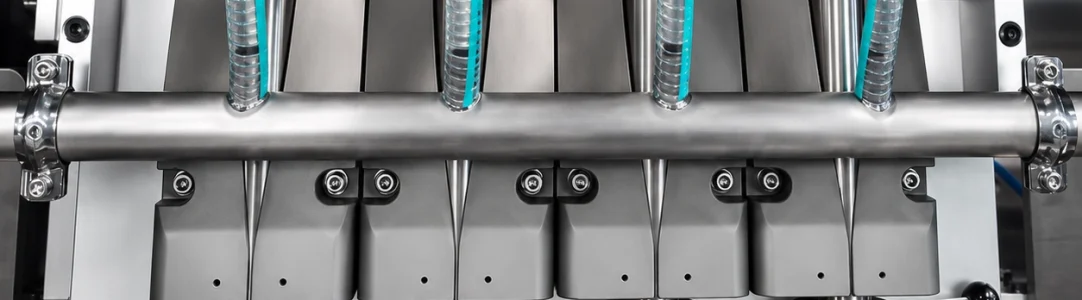
Powder dust is one of the most common causes of unstable stick pack production.
Fine powder can settle on the film, sealing jaws, forming area, and machine frame. Once dust enters the sealing zone, it can weaken seals, create cosmetic rejects, increase cleaning time, and reduce real output.
For electrolyte powder, EIXPACK can configure dust control according to material behavior.
Dust extraction is especially useful for fine, light, or highly active powders. Static control can also be selected when the powder or film creates cling during filling and forming. These options should be evaluated through testing, not added blindly.
Cleanability matters even more for contract manufacturers.
EIXPACK’s standard quick-release hopper design helps reduce changeover effort, while 304 stainless steel contact parts are suitable for many food supplement powder packaging applications.
If your formula is acidic, highly hygroscopic, or requires stronger sanitation procedures, confirm whether any upgraded contact materials or cleaning steps are needed.
For U.S. facilities, dry powder handling also requires attention to housekeeping and dust safety.
Use OSHA combustible dust guidance as a safety reference when evaluating powder dust accumulation, extraction points, static behavior, and plant-level risk control.
Choose film and sealing conditions carefully
Electrolyte powders are often moisture-sensitive.
A stick pack must protect the powder from humidity, prevent caking, maintain flavor quality, and remain easy to open. The film structure, sealing layer, forming tube, seal temperature, pressure, and dwell time must work together.
Common film choices include PET/PE, PET/AL/PE, paper-based laminates, and selected recyclable structures.
The right choice depends on barrier requirements, shelf-life testing, printing, cost, and brand positioning. If your brand wants recyclable or paper-based packaging, test machinability early because these materials may have narrower sealing windows or different stiffness than conventional laminates.
For U.S. food and supplement projects, ask the film supplier for documentation related to food-contact suitability.
Packaging material compliance should be reviewed by your material supplier and regulatory team, while the machine supplier can help test sealing performance and machinability. The FDA food-contact packaging guidance is a useful external reference for this discussion.
Check control system, date printing, and inspection options
A reliable electrolyte powder stick pack machine should make operation repeatable.
EIXPACK’s confirmed control system for this application uses Siemens control components.
For B2B buyers, this matters because stable controls, recipe management, alarm logic, and operator interface quality all affect daily production consistency.
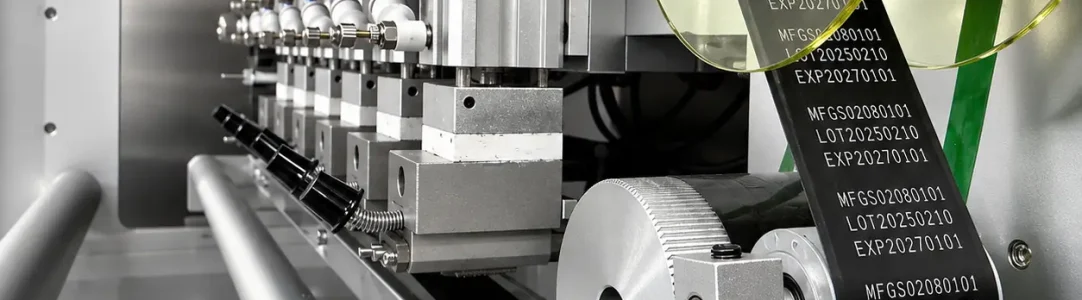
The confirmed inspection and coding configuration includes a date printer.
For supplement and food brands, date coding supports traceability, inventory rotation, and customer service.
If your project requires lot codes, expiry dates, QR codes, checkweighing, metal detection, vision inspection, or automatic rejection, discuss these before quotation so the electrical layout and machine frame can be planned correctly.
A good factory acceptance test should not only show the machine running.
It should record fill-weight performance, seal appearance, coding position, changeover steps, reject handling, operator access, and cleaning points.
Ask for FAT videos and test records using your powder and your selected film whenever possible.
Compare suppliers with a practical buying checklist
Do not compare suppliers only by machine price.
Price differences often come from lane count, screw design, servo control, hopper design, stainless steel level, dust extraction, static control, date printing, inspection integration, guarding, documentation, spare parts, and after-sales support.
For a nutraceutical brand, the main risk may be delayed launch or poor consumer experience from leaking or caked sticks.
For a contract manufacturer, the bigger risk may be long changeover time and unstable production across many formulas.
For a pharmaceutical company, documentation, access control, batch traceability, and validation support may carry more weight than headline speed.
U.S. dietary supplement projects should also align packaging operations with quality requirements.
Use the FDA dietary supplement cGMP requirements as a regulatory reference, then confirm how the machine supports weight control, coding, cleaning records, operator training, maintenance, and rejection of nonconforming packs.
Decision Area |
What to Confirm |
Why It Matters |
EIXPACK Configuration Direction |
|---|---|---|---|
Powder behavior | Flowability, dust level, bulk density, moisture sensitivity | Determines auger, hopper, and dust control | Test real electrolyte, protein, or supplement powder samples |
Fill range | 2.6g–16g | Affects screw size, dosing control, and seal stability | Confirmed range for this project |
Stick size | 20–35mm width; 75–165mm length | Affects forming tube, film tracking, and sealing | Confirmed range for this project |
Production speed | 40–800 sticks/min | Real output depends on lane count, cleaning, film, and SKU changes | Confirmed capacity range for this project |
Screw selection | Long or short screw | Powder density and flow behavior affect dosing stability | Select based on material testing |
Why EIXPACK is relevant for electrolyte powder stick pack projects
EIXPACK’s value for this type of project is not only the machine itself, but the ability to match machine layout to powder behavior, pack format, speed target, and production model.
For electrolyte powder, the confirmed application range includes 2.6g–16g fill weight, 20–35mm bag width, 75–165mm bag length, and 40–800 sticks per minute production capacity.
For powders with different flow behavior, EIXPACK can select long or short augers, configure dust extraction, offer static control where needed, use a standard quick-release hopper, and apply 304 stainless steel contact parts.
The Siemens control system and date printer configuration also support repeatable operation and basic traceability needs.
Buyers can also review EIXPACK’s broader stick pack machine category if they need to compare powder, liquid, gel, and granule applications, or use the EIXPACK first-time buyer guide when preparing technical requirements, FAT questions, and supplier evaluation criteria.
The best purchasing step is to send your real powder, film plan, target dose, expected monthly output, and required inspection functions.
This allows EIXPACK to review whether a standard powder stick pack machine, a customized multi-lane system, or a broader automated packaging layout is the right starting point.
Final Purchasing Advice
The right electrolyte powder stick pack machine is the one that proves it can run your powder, your stick size, your film, and your quality requirements under realistic production conditions.
Start with powder testing, confirm the 2.6g–16g dose and 20–35mm by 75–165mm pack range, evaluate 40–800 sticks per minute capacity against real production losses, and check dust control, static control, cleanability, controls, coding, and supplier support before signing the order.
Frequently Asked Questions (FAQ)
An electrolyte powder stick pack machine forms narrow packs from roll film, doses electrolyte powder into each pack, seals the pack, prints date information if configured, cuts the sticks, and discharges them for secondary packaging.
Yes, in many cases, but the auger length, hopper design, dust control, and cleaning process must be checked against both powders. Protein powder may be bulkier and more aerated than electrolyte powder.
The confirmed fill range is 2.6g–16g, with a bag width of 20–35mm and a bag length of 75–165mm.
The confirmed production capacity range is 40–800 sticks per minute, depending on lane count, product behavior, film, pack size, and selected configuration.
Buyers should ask about long or short auger selection, dust extraction, optional static control, quick-release hopper, 304 stainless steel contact parts, Siemens control system, date printer, and space for future inspection upgrades.
Quick Quote Request
Send EIXPACK your electrolyte powder sample, target fill weight, stick width and length, film structure, monthly output target, and inspection requirements.
EIXPACK can review whether a standard powder stick pack machine, a customized multi-lane line, or a broader stick pack automation layout is the right fit for your U.S. supplement, pharmaceutical, food, or contract manufacturing project.