
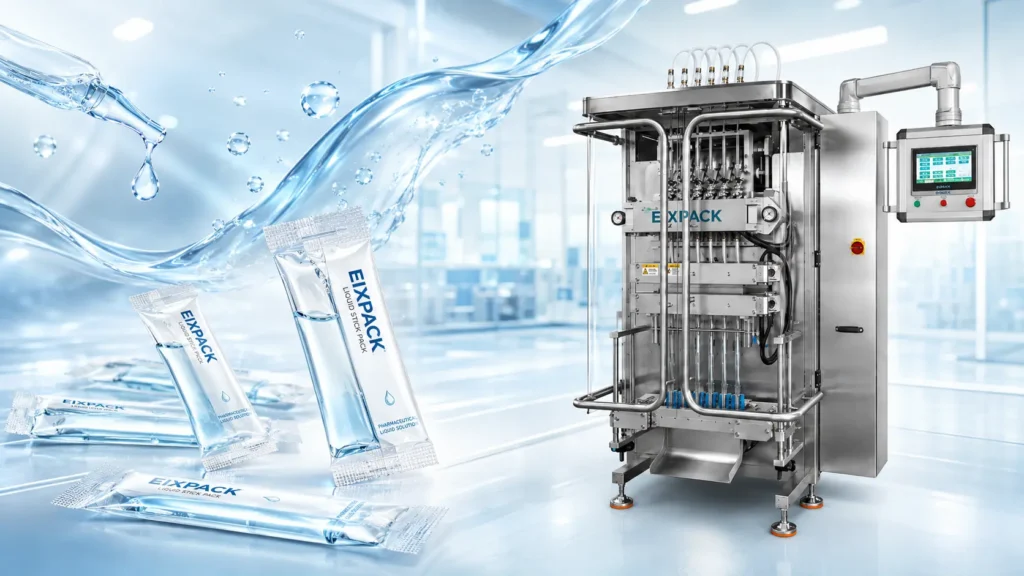
What is a Stick Pack Machine? Solving Dust and Leakage Pain Points
When buyers ask what is a stick pack machine, they aren’t looking for basic textbook definitions. They want to know how to pack single-serve products at extremely high speeds without wasting expensive materials.
Based on our 22 years of R&D and manufacturing experience, the real value of a top-tier multi-lane machine lies in its ability to eliminate powder dust and prevent liquid drips during high-speed operations.
The Definitive Answer: What is a Stick Pack Machine?
At its core, a stick pack machine is an automated vertical form-fill-seal (VFFS) packaging system specifically designed to produce small, single-serve tubular pouches known as “stick packs.” Unlike traditional flat sachets, stick packs are narrow, compact, and typically save up to 40% in flexible film material.
The machine operates through a highly synchronized process: it unwinds a single large roll of packaging film, uses slitter blades to cut the film into multiple narrow lanes, folds each lane into a vertical tube, fills it with a precise dose of product (such as powders, liquids, or pharmaceutical gels), and then thermally seals and cuts the individual packs.
Because it processes multiple lanes simultaneously (like the 8-lane systems we build), it offers massive production outputs suitable for global supply chains.
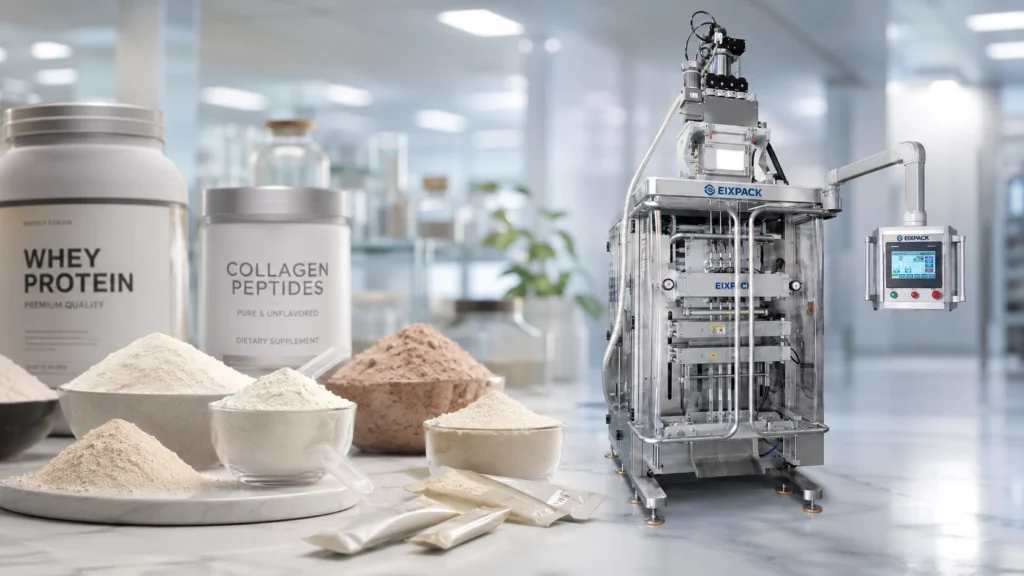
The Core Anatomy: Driven by Siemens Precision
A standard packaging machine forms, fills, and seals tubular pouches from a single roll of film. However, high-speed consistency requires robust brains.
We rely on Siemens PLC and servo motor systems to control film tension and dosing accuracy. A micro-millimeter deviation in film tracking causes massive reject rates.
Siemens control ensures that simply doesn’t happen.
Fine powders are notorious for flying up during the high-speed filling stage.
This dust contaminates the sealing area, causing weak seals and eventually leading to product spoilage.
A high-quality powder stick pack machine must address this directly with enclosed auger systems and targeted vacuum dust extraction.
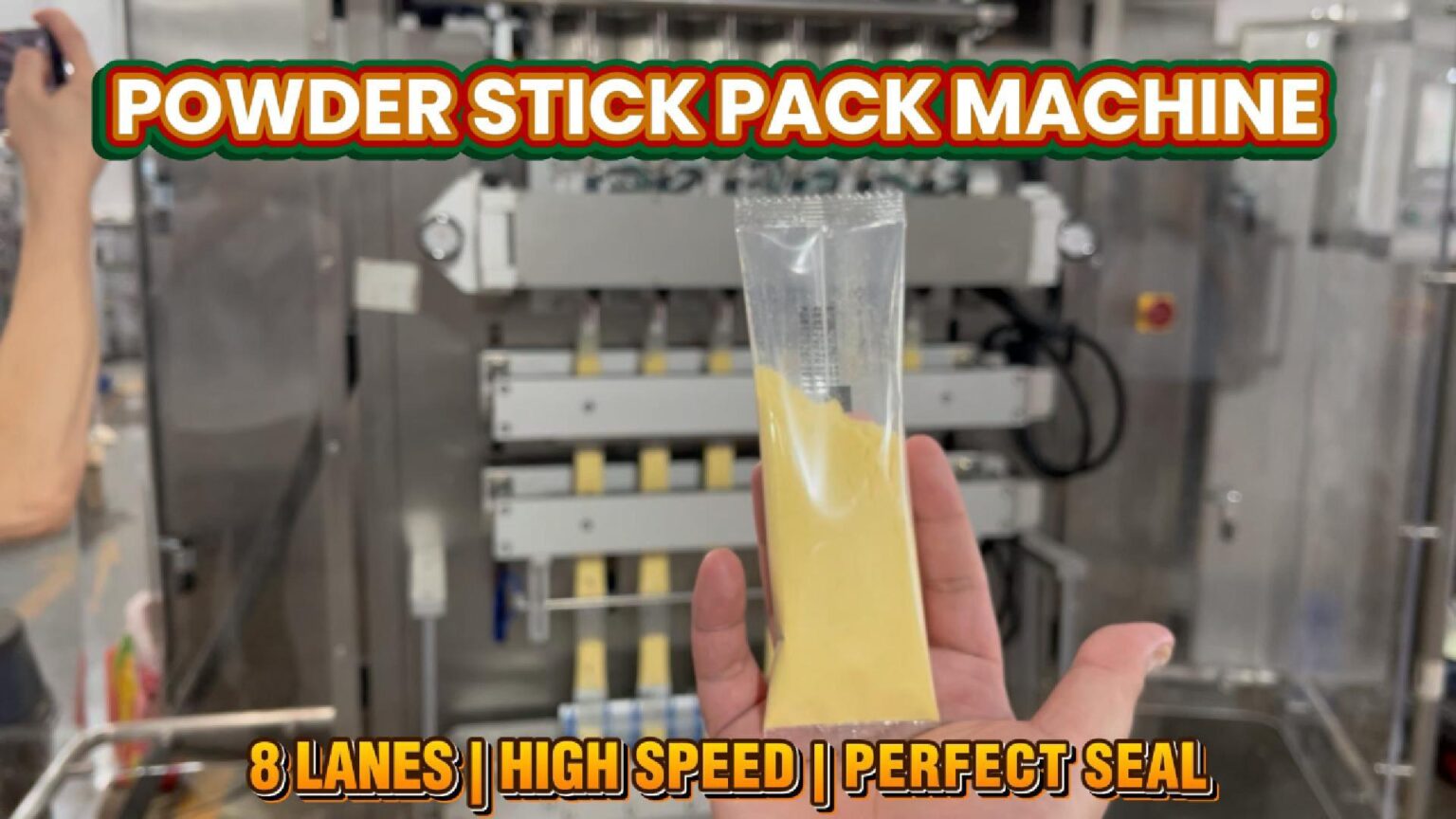
Our recent deployment in Thailand proves this engineering capability.
We customized an 8-lane system for a client handling 60g milk tea powder. The machine consistently runs at a speed of 320 bags/min. More importantly, the dosing precision remains locked at ±0.5%. This exact level of accuracy at high speeds prevents giveaway and maximizes raw material yield.
Eliminating Leaks in Pharmaceutical Gel Stick Pack Packaging Machines
Liquids are tricky. High-viscosity gels are worse. The biggest headache with pharmaceutical gel stick pack packaging machines is the “tail”—the tiny string of viscous gel that drips onto the seal area after the filling cycle stops.
You cannot use a universal liquid pump for everything. For highly viscous pharmaceutical gels, we engineer dedicated suck-back pump heads. At the exact moment the fill stops, the pump pulls a slight vacuum, sucking the gel tail back up into the nozzle. The sealing jaw then closes on a perfectly clean film.
This ensures the packaging meets strict medical-grade hygiene standards, such as those outlined in the FDA packaging regulations.
Finding the Right Stick Pack Machine for Liquids
A reliable stick pack machine for liquids adapts to the material, not the other way around. Water-like fluids require entirely different valve configurations compared to thick sauces or gels. By matching the specific pump head design to your fluid’s behavior, we eliminate dripping entirely and protect your production line from cross-contamination.
Frequently Asked Questions (FAQ)
Speed depends entirely on the number of lanes and the material flow. As demonstrated in our Thailand milk tea project, an 8-lane powder machine handles 320 bags/min effortlessly while maintaining strict weight parameters.
No. The dosing systems are fundamentally different. Powders require auger fillers, while liquids require piston or suck-back pumps. You need dedicated machines for each material type to guarantee zero defects.
Routine calibration of the Siemens servo drives and regular cleaning of the pump or auger heads are critical. Our technical manager Cherry always advises clients during local deployments in Southeast Asia: strict maintenance of the sealing jaws and dosing valves directly dictates your machine's lifespan and accuracy.