
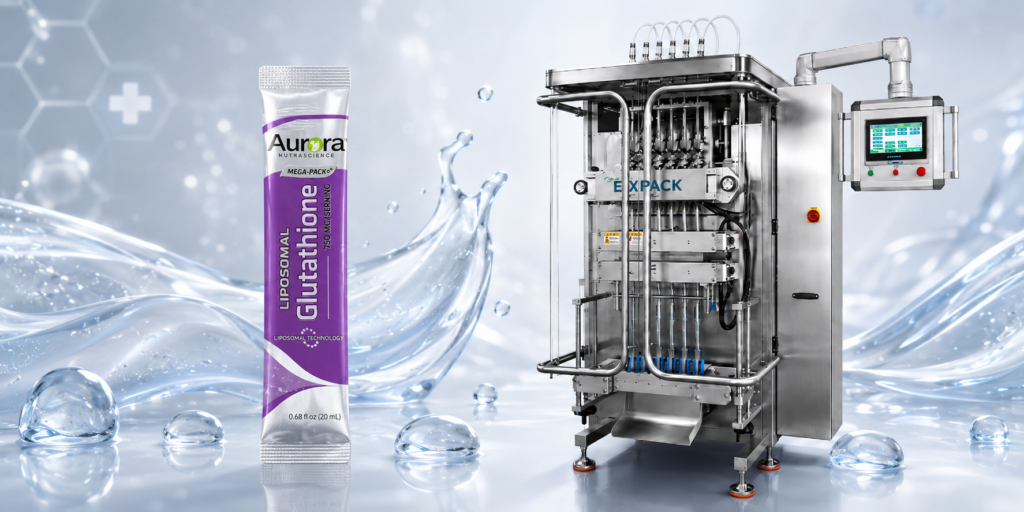
Choosing liquid food supplement stick pack packaging machines should begin with the behavior of the formula, not with a catalog speed.
A machine that runs well with a thin liquid vitamin may require a different pump, nozzle, temperature-control system and cleaning method when the product changes to liquid collagen, an energy gel or Mānuka honey.
For brand manufacturers and contract packers, the safest buying process is to test the actual product, match the filling system to its viscosity and filling behavior, verify clean sealing at the target output, and confirm that changeover and cleaning procedures fit the production plan.
Start with the Product, Not the Machine Model
This matters because a 10 mL liquid probiotic and a 10 mL energy gel can behave very differently. The probiotic may flow easily but foam during dosing, while the gel may stop cleanly at low speed and begin to string when output increases.
Honey can also change viscosity with temperature. The final configuration should therefore depend on sample testing, viscosity, temperature, particle condition and target speed.
Match the Filling System to the Formula
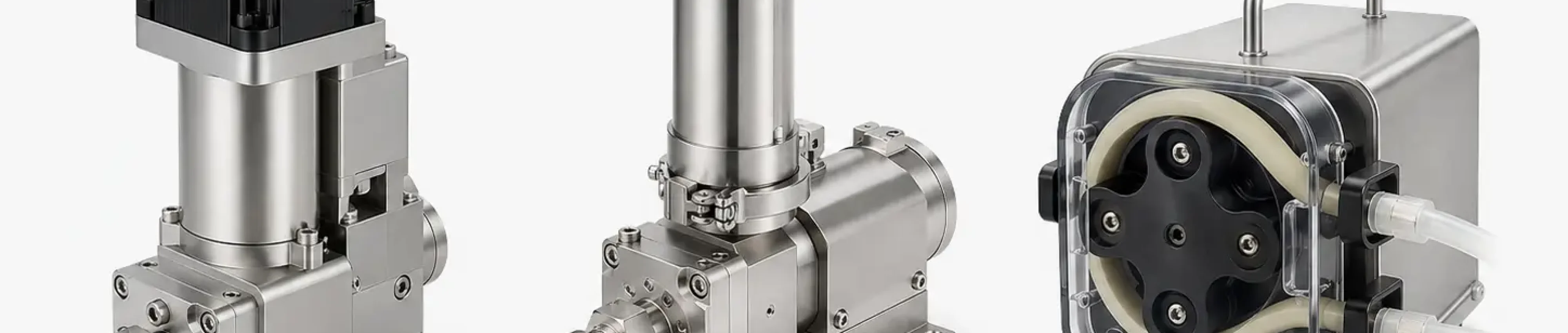
EIXPACK liquid systems can be configured with servo ceramic pumps, piston pumps or peristaltic pumps.
Each pump type solves a different production problem, so buyers should ask the supplier to explain why a pump has been selected rather than accepting a generic recommendation.
Filling system |
Typical evaluation focus |
Potential applications |
|---|---|---|
Servo ceramic pump | Controlled dosing, wear resistance, repeatability and anti-drip performance | Liquid vitamins, liquid collagen, syrups, honey and some gels |
Piston pump | Larger dose movement, adjustable stroke and handling of thicker products | Nutritional syrups, energy gels, honey and other viscous formulas |
Peristaltic pump | Product isolation in tubing, easier fluid-path replacement and gentle transfer | Thin liquids, sensitive formulas and selected pharmaceutical syrups |
These are selection directions, not universal rules. The correct pump must be confirmed with the actual formula.
Viscosity is only one factor. Temperature, stringing, foaming, particles, tubing compatibility, cleaning validation and the desired speed can change the decision.
Protect the Seal Area from Dripping and Stringing
For liquid and viscous products, filling accuracy is not enough.
A precisely measured dose can still create rejects if a drop or product string reaches the sealing margin.
Contaminated seal areas may cause weak seals, leakage, poor appearance and unstable downstream handling.
The standard configuration should therefore control each lane’s filling timing independently and use a suck-back anti-drip nozzle.
For products that form tails or strings, a product cut-off structure is also important. Independent seal-temperature control and either servo or pneumatic sealing allow the process to be adjusted around the selected film and product behavior.
Heated pipelines or an insulated hopper can be added when temperature control is required to maintain stable flow.
During testing, inspect more than the finished dose.
Check the inside and outside of the seal area, the cut position, residual liquid at the nozzle, stringing between the nozzle and film, and the first packs produced after a stop and restart.
These transition packs often reveal problems that are not visible during steady running.
Confirm Fill Volume and Pack Format Together
Common target volumes for liquid supplement stick packs include 5 mL, 10 mL, 15 mL, 20 mL and 30 mL. However, volume should not be approved separately from bag dimensions.
The liquid level, headspace, seal width, opening method and final appearance all depend on the relationship between the dose and the stick pack geometry.
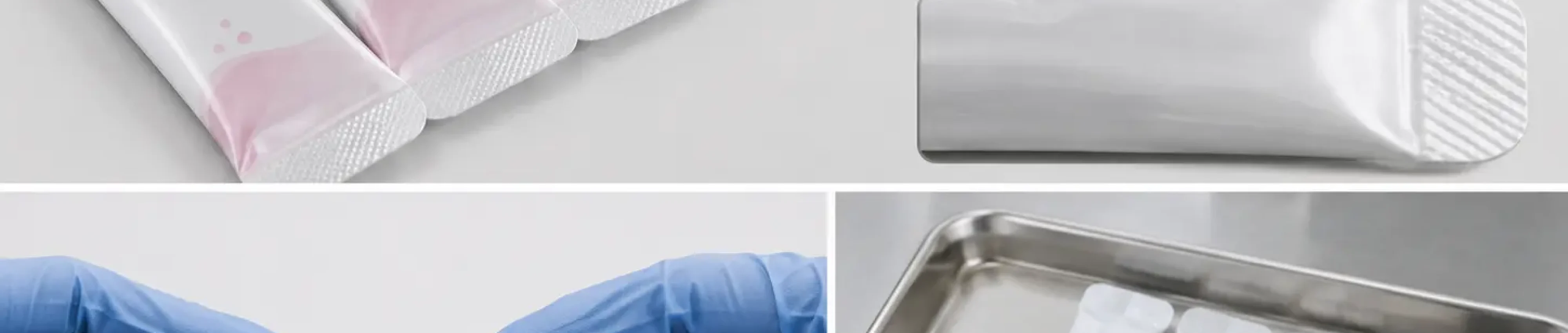
Available formats can include round-corner packs, bottle-neck or shaped packs, easy-tear features, continuous strips and individually cut sticks.
A shaped package may strengthen shelf differentiation, but it may also add tooling, film-registration and cutting requirements.
Contract packers should confirm how quickly the machine can switch among SKUs and which changes require a new forming set, cutting component or recipe.
The planned application page for liquid food supplement stick pack packaging machines can be used to compare application-specific configurations, while the EIXPACK liquid stick pack machine page provides the broader machine-platform reference.
Evaluate Accuracy at the Intended Production Speed
A stated filling accuracy is meaningful only when the test conditions are clear.
For the confirmed EIXPACK test configuration, the reference target is ±0.5% filling accuracy on a 10-lane system operating at 400 sticks per minute.
Buyers should still ask what product, fill volume, product temperature, test duration, sampling plan and measurement method were used.
Do not assume that the same result automatically applies to every formula.
A thin, stable liquid may fill differently from aerated syrup, a temperature-sensitive collagen formula or a high-viscosity gel.
During factory acceptance testing, evaluate accuracy after startup, during sustained operation, after a reel change, after a short production stop and near the end of the product batch.
Speed should also be treated as a verified operating condition rather than a headline number.
Ask for both the peak demonstrated speed and the recommended sustained speed for the actual product and package.
The slower figure may be the more useful one for labor planning, monthly capacity and downstream automation.
Make Seal Quality a Measured Acceptance Criterion
The confirmed seal qualification reference is 99.5%. This figure should be tied to a defined inspection method and sample quantity in the final acceptance agreement.
A supplier and buyer should agree in advance on what counts as a qualified seal, how leakage is tested, how cosmetic defects are classified and how packs produced during startup or adjustment are handled.
For a buying decision, request a practical seal-validation plan.
It may include visual inspection, squeeze checks, vacuum or immersion tests where appropriate, and retention of samples from different periods of the run.
The chosen method should reflect the product, laminate, distribution route and brand-risk level.
Require Cleaning and Changeover Evidence
For a contract manufacturer, cleaning time can be as important as rated output. Multiple liquid vitamin, probiotic, collagen, gel, honey and syrup SKUs may require different tubing, pumps, temperatures and cleaning procedures.
A fast machine that takes too long to clean can reduce usable daily capacity.
Buyers should request a written description of the cleaning sequence, cleaning-fluid path, drain points, operator steps, recipe controls and any components that still require removal.
The FAT should demonstrate the CIP cycle and a representative SKU change rather than showing only production.
Listings for pharmaceutical liquid stick pack packaging machines should not be treated as a guarantee that one standard configuration suits every medicine.
Product-contact materials, cleaning validation, documentation, controls and regulatory requirements must be defined for the specific project.
Validate the Buyer’s Film, Not a Generic Sample Roll
EIXPACK can design the sealing and forming system around the customer’s selected packaging film.
That flexibility does not remove the need for validation.
Film structure, thickness, coefficient of friction, print registration, sealant layer, barrier performance and compatibility with the formula can all affect machine stability and shelf performance.
The FDA explains that food-contact substances include packaging components and certain substances used in processing equipment.
Buyers should obtain suitability and compliance documentation from the film supplier for the intended food-contact use and conditions, then provide the production film for machine testing.
The machine supplier should confirm forming, tracking, cutting and sealing performance with that film rather than relying only on an unprinted factory test roll.
Review U.S. Quality-System and Machine-Safety Needs
For products sold as dietary supplements in the United States, FDA’s dietary supplement CGMP framework under 21 CFR Part 111 applies to relevant manufacturing, packaging, labeling and holding operations.
The guidance also addresses automated, mechanical and electronic equipment, including calibration, inspection, checking, maintenance, cleaning and sanitizing.
A packaging machine supports the manufacturer’s quality system; it does not by itself make a product or facility compliant.
Ask what records and project documents can be supplied, such as operating instructions, cleaning procedures, maintenance guidance, electrical drawings, calibration information, FAT records and recommended spare-parts lists.
The final documentation package should be written into the purchase agreement
Machine safety also requires project-specific review.
OSHA’s general machine-guarding rule requires safeguarding against hazards created by points of operation, ingoing nip points, rotating parts and similar risks.
Buyers should review guards, safety-door interlocks, emergency stops, access for cleaning, lockout points and the plant’s electrical requirements before approving the layout.
Use Sample Testing as the Main Supplier-Selection Tool
A useful supplier should ask for product samples, production film, target pack dimensions, fill volume, target speed and cleaning expectations before finalizing the machine.
The FAT protocol should define what will be tested and how acceptance will be decided.
At minimum, the trial should cover dosing accuracy, seal qualification, leakage risk, pack appearance, coding position, film tracking, stop-and-restart behavior, CIP operation, SKU changeover and sustained operation at the agreed speed.
Buyers should receive representative finished samples and a record of the settings used.
This process is especially important for an automatic liquid stick packing machine that will later connect to counting, cartoning or case-packing equipment.
Upstream speed has little value if the discharge pattern is unstable or the downstream equipment cannot receive the sticks consistently.
Look for Evidence from a Similar Application
A relevant project reference is more useful than a long list of unrelated machines.
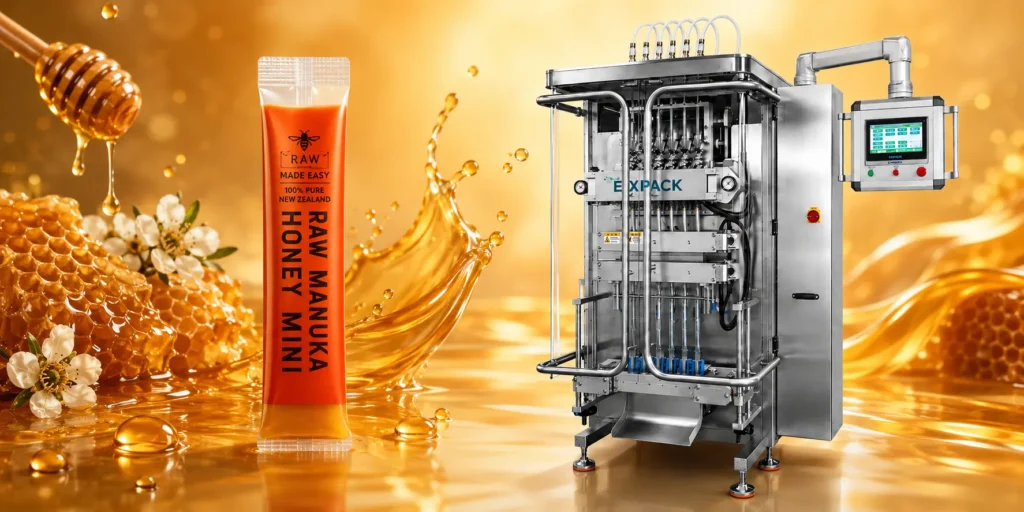
In the EIXPACK Mānuka honey liquid food supplement stick pack project, a New Zealand contract manufacturer used an eight-lane system with a servo ceramic pump for high-viscosity honey.
The project targeted dripping, stringing, product trapping in the seal area and round-corner stick pack presentation, with a documented project speed of 240 sticks per minute.
The lesson is not that every supplement should use the same pump or speed.
It is that the supplier should connect product behavior to filling, anti-drip control, sealing and pack format.
Ask to see a trial or project with a liquid that behaves similarly to yours.
Common Buying Mistakes to Avoid
Another mistake is comparing only the primary packer.
Confirm space, utilities, product feeding, discharge handling, coding, inspection, counting, cartoning and future line integration.
A lower initial price can become expensive if these interfaces must be redesigned later.
The first mistake is selecting by maximum speed before testing the formula.
The second is assuming one pump can handle every liquid and gel SKU. The third is accepting accuracy data without test conditions.
The fourth is treating cleaning as an operator issue instead of a capacity factor. The fifth is approving the machine with a generic film and testing the branded laminate only after delivery.
Common Buying Mistakes to Avoid
Choose a machine only after the supplier has matched the pump to the product, demonstrated anti-drip control, tested the customer’s film, verified accuracy and seal quality at the intended speed, shown the CIP and changeover process, and documented safety and line-integration requirements.
For EIXPACK, the next engineering step is to evaluate product samples and translate the confirmed formula, pack style and production target into a test plan and machine configuration.
Frequently Asked Questions (FAQ)
They can be configured for liquid vitamins, liquid probiotics, liquid collagen supplements, energy gels, Mānuka honey and selected pharmaceutical syrups. Final suitability depends on viscosity, temperature, particles, foaming, stringing, fill volume and target speed.
Servo ceramic pumps, piston pumps and peristaltic pumps are available for different applications. The pump should be selected through actual product testing rather than fill volume alone.
One machine platform may support both, but different pumps, nozzles, temperature controls or recipes may be required. Buyers should test the lowest- and highest-viscosity products planned for the line.
Accuracy should be tested using the actual product, target fill volume, planned production temperature and agreed operating speed. The FAT should define the sampling method, test duration and acceptance criteria.
The confirmed EIXPACK configuration can include a complete automatic CIP program. The buyer should still review the cleaning-fluid path, drain points, operator steps and any parts that require manual removal.
Yes. The forming and sealing system can be designed around the customer’s film, but the actual printed production film should be tested before final acceptance.
Quick Quote Request
Planning a liquid vitamin, probiotic, collagen, energy gel, honey or syrup project? Send EIXPACK your product sample, target fill volume, stick pack format, packaging film and required output.
The engineering team can evaluate the formula and prepare a test plan for suitable liquid food supplement stick pack packaging machines.