
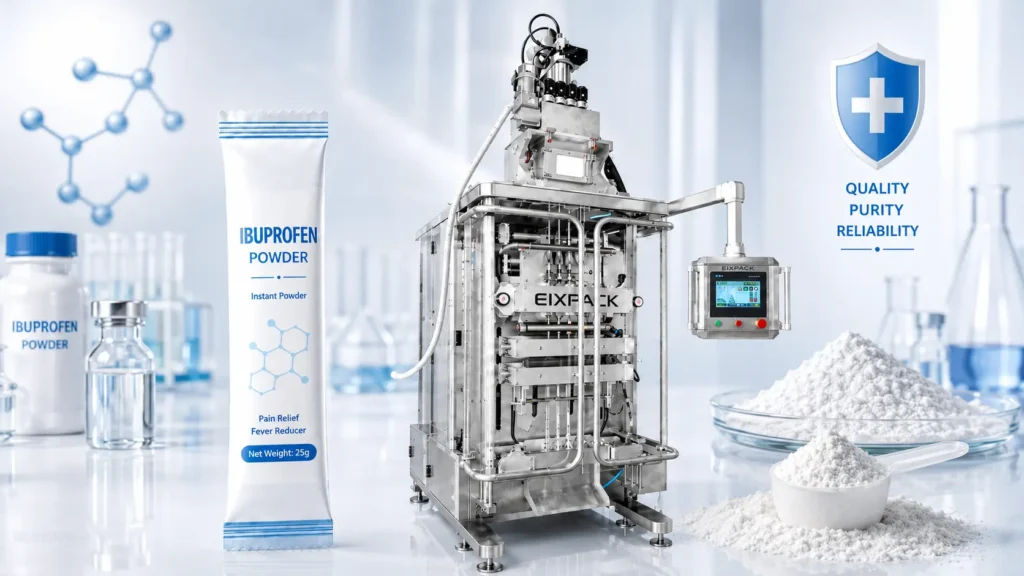
Choosing pharmaceutical stick pack packaging machines should start with the product, not the machine catalog. Before comparing suppliers, a pharmaceutical company or contract manufacturer should define the dosage form, target fill weight, packaging film, required output, cleaning method, validation documents, and factory layout. For EIXPACK pharmaceutical stick pack projects, the practical selection range is 40–480 sticks per minute, 5–60 g filling range, ±0.5% accuracy under confirmed test conditions, and standard 2–12 lane configurations with customization available.
The right machine is not simply the fastest one. It is the machine that can repeatedly form, fill, seal, code, inspect, and discharge stick packs while protecting product quality and supporting your quality system. A high speed claim is useful only when the dosing system, film handling, sealing jaws, reject logic, cleaning process, and documentation package can support stable production. Buyers should compare pharmaceutical stick pack packaging machines by risk reduction, not only by brochure output.
Start with product format before choosing a machine
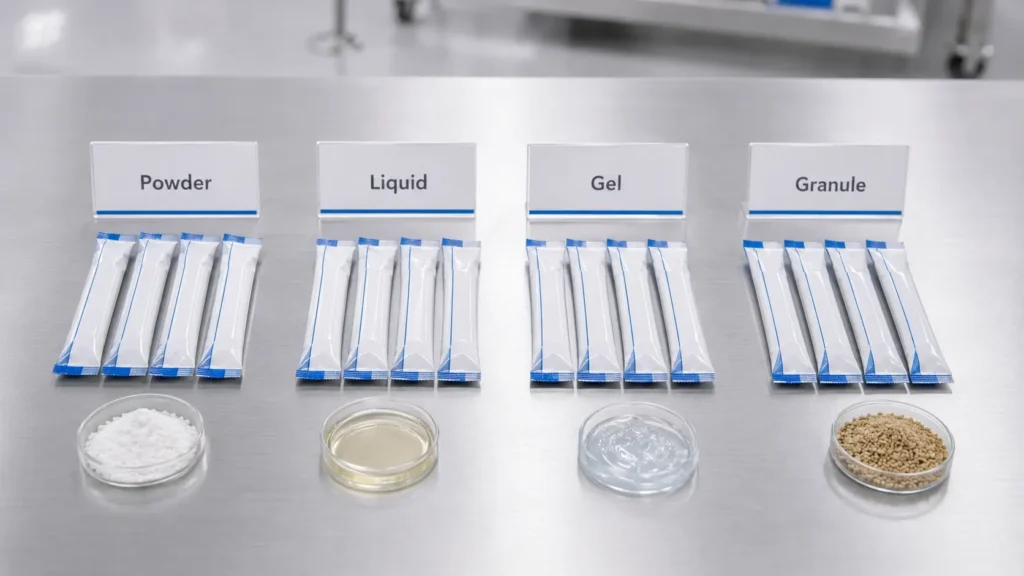
Powder, liquid, and gel products behave differently inside a stick pack machine. Powder may bridge in the hopper, create dust, absorb moisture, or cling to product-contact parts. Liquid may foam, splash, drip, or contaminate the sealing area. Gel may string after filling, change viscosity with temperature, or require a wider stick format for cleaner filling and better user experience. A machine frame can often be adapted, but the filling system and product-contact configuration must match the material.
For ibuprofen powder stick pack packaging machines, paracetamol powder stick pack packaging machines, and aspirin powder stick pack packaging machines, the buyer should review bulk density, particle size, target dose, flowability, dust level, moisture sensitivity, and cleaning requirements. EIXPACK can configure powder systems with options such as auger filler, dust extraction, date coder, and checkweigher, depending on the product and quality plan. For powder applications, buyers can also review EIXPACK’s powder stick pack machine page during early specification work.
For ibuprofen liquid stick pack packaging machines and pharmaceutical liquid stick pack packaging machines, the discussion changes to viscosity, filling temperature, foaming behavior, pump type, nozzle shutoff, and seal protection. EIXPACK liquid configurations may use piston pump or servo pump systems, with anti-drip nozzle options to reduce the chance of product residue entering the sealing jaws. A liquid machine should be tested with the actual formulation or a close substitute before final approval.
Pharmaceutical gel stick pack packaging machines should be treated as high-viscosity liquid projects. Gels need careful control of filling cut-off, product tailing, temperature behavior, pump selection, and seal cleanliness. EIXPACK has experience with sample testing for pharmaceutical gel applications and a publicly shareable U.S. eight-lane sports gel project, but each regulated drug, OTC, or supplement formula should still be tested with the intended film and filling speed before procurement.
Match configuration to output, dose, and lane count
EIXPACK does not need to force buyers into a fixed model name for this application. A configuration-based selection is more useful for pharmaceutical stick pack packaging machines because product behavior, film structure, lane count, cleaning expectations, and validation scope can change the final design. Buyers should provide product samples, target fill weight, powder or viscosity data, film structure, stick size, output target, factory utilities, and documentation needs before requesting a final quotation.
The first technical filter is whether the machine can meet the required output without forcing unstable operation. EIXPACK’s 40–480 sticks per minute range can support pilot production, growing OTC brands, and contract manufacturing projects that need controlled scale-up. Standard 2–12 lane configurations allow buyers to balance output, footprint, tooling cost, maintenance complexity, and changeover time. More lanes can improve throughput, but they also increase the need for lane balancing, film tracking, reject logic, and preventive maintenance.
Fill range is another early decision point. EIXPACK’s 5–60 g range covers many single-dose powder, liquid, and gel stick pack applications. The real question is whether the selected dosing system can maintain accuracy at your exact target fill weight and speed. A 5 g cohesive powder and a 50 g viscous liquid are different engineering problems. The ±0.5% accuracy range should be confirmed with EIXPACK based on material, fill weight, lane count, speed, film, and test method.
Product Type / Project |
Recommended EIXPACK Focus |
Useful Options |
Key Risk to Test |
|---|---|---|---|
Ibuprofen powder stick packs | Powder dosing and dust control | Auger filler, dust extraction, date coder, checkweigher | Bridging, dust in seal area, dose variation |
Paracetamol powder stick packs | Dose repeatability and clean sealing | Auger filler, checkweigher, quick-release contact parts | Poor flow, moisture sensitivity, weak seals |
Aspirin powder stick packs | Contact material and residue control | 316L contact parts, dust extraction, validation documents | Abrasion, residue buildup, cleaning difficulty |
Ibuprofen liquid stick packs | Pump selection and anti-drip filling | Piston pump, servo pump, anti-drip nozzle, date coder | Foaming, dripping, seal contamination |
Pharmaceutical gel stick packs | High-viscosity filling control | Servo pump, anti-drip nozzle, CIP/SIP for selected configurations, wider stick format | Stringing, tailing, viscosity change |
Build a compliance-ready specification for the U.S. market
For U.S. pharmaceutical companies and contract manufacturers, equipment selection should connect with a user requirement specification. A useful URS lists product type, fill range, accuracy target, film structure, lane count, output target, contact material, cleaning method, coding needs, inspection plan, reject handling, utilities, documentation, and validation expectations. This helps purchasing, production, engineering, maintenance, and quality teams evaluate the same technical scope.
FDA describes current good manufacturing practice regulations as minimum requirements for the methods, facilities, and controls used in manufacturing, processing, and packing drug products. Buyers can use FDA CGMP regulations for drug manufacturing and packing as a reference when discussing packaging equipment requirements. For packaging materials and container closure systems, 21 CFR 211.94 drug product containers and closures is also relevant to suitability, cleaning, protection, and contamination control.
Material contact surfaces matter. EIXPACK’s product-contact parts use 316L stainless steel, which is a suitable specification to include in pharmaceutical equipment discussions. Buyers should also review gaskets, tubing, pump parts, filling nozzles, sealing-area access, lubrication points, and cleaning procedures. A machine can use strong contact-part materials but still be difficult to validate if residue traps, tool removal, or line clearance steps are poorly designed.
Review cleaning, changeover, and validation before ordering
Cleaning and changeover often decide whether a stick pack machine works in real production. EIXPACK provides a quick-release structure for product-contact parts and reports that auger replacement can be completed in about 15 minutes, depending on configuration and operator readiness. For multi-SKU contract manufacturing, this can reduce downtime. Buyers should still verify the full changeover process, including line clearance, recipe settings, film roll change, tooling replacement, coding setup, and post-cleaning inspection.
CIP and SIP support can be important for selected liquid and gel configurations, especially when product residue is sticky, sugar-based, oil-based, or sensitive to microbial control. This support should not be assumed for every machine or every dosing system. Confirm which parts are included, what utilities are required, how cleaning effectiveness will be documented, and whether the final configuration supports CIP, SIP, both, or neither.
Validation support should be discussed before a purchase order is issued. Ask for a document list that includes manuals, electrical drawings, pneumatic drawings where applicable, material-contact lists, spare parts lists, FAT protocol, SAT protocol, IQ/OQ/PQ support, alarm list, maintenance schedule, recommended calibration points, and cleaning guidance. A well-prepared supplier makes quality review easier and reduces delays during installation and qualification.
Test packaging film, sealing, coding, and inspection
Packaging film is not a late-stage purchasing item. Powders may need moisture barrier performance. Liquids and gels may need chemical resistance, puncture resistance, and reliable heat sealing. The film should be tested with the actual product and machine settings before commercial production. Even a small amount of powder dust, oil, or liquid residue in the seal area can cause weak seals or leaks during storage and distribution.
Coding and inspection should match the batch record strategy. Date coder options are useful for lot number, expiration date, and traceability. Checkweigher options can help support weight control, especially for high-value powders, regulated OTC products, or contract manufacturing batches. Buyers should also clarify reject handling: whether rejection is lane-based, cycle-based, or downstream, and how rejected packs are collected, recorded, and separated from accepted product.
Operator safety should be reviewed with the same seriousness as output and accuracy. Guarding, interlocks, emergency stops, access doors, hot surfaces, moving jaws, and film roll handling should be checked against the buyer’s internal safety program. U.S. buyers can reference OSHA machine guarding requirements when reviewing operator protection and machine access.
Common mistakes buyers should avoid
The first mistake is choosing by speed before testing the product. A machine that runs fast with a free-flowing powder may slow down with a sticky pharmaceutical powder. A liquid system that fills water cleanly may drip when filling ibuprofen liquid or a viscous gel. Product testing should happen before a buyer commits to commercial output, delivery promises, or validation timelines.
The second mistake is underestimating cleaning and line clearance. Fast production does not help if every changeover creates long downtime or residue risk. Review quick-release parts, auger change time, CIP/SIP scope, dust extraction, pump cleaning, reject collection, and line clearance procedures before signing the final specification.
The third mistake is treating compliance documents as an afterthought. Pharmaceutical buyers should request URS support, FAT, SAT, IQ/OQ/PQ documents, material contact information, validation package details, manuals, drawings, cleaning guidance, and maintenance information early. A clear document plan helps avoid delays when the machine arrives at the production site.
The fourth mistake is selecting film too late. Film choice affects barrier performance, sealing temperature, tracking, tear behavior, appearance, and leakage risk. For pharmaceutical liquid stick pack packaging machines and pharmaceutical gel stick pack packaging machines, film and seal testing should happen early because residue in the seal zone can quickly become a quality issue.
Final buying guidance
The best pharmaceutical stick pack packaging machines are selected through product testing, configuration review, and documentation planning. For powders, focus on flowability, dust control, dosing, sealing, and cleaning. For liquids, focus on viscosity, pump selection, anti-drip control, foaming behavior, and seal protection. For gels, focus on high-viscosity filling, product tailing, temperature behavior, and a stick format that users can open and empty easily.
Need help choosing pharmaceutical stick pack packaging machines for powder, liquid, or gel products? Share your product type, target fill weight, viscosity or powder data, packaging film, required output, cleaning expectations, and validation document needs with EIXPACK. The EIXPACK team can review your application, recommend a suitable 2–12 lane configuration, arrange sample testing, provide testing videos where available, and help prepare the technical items needed before procurement. You can request a custom pharmaceutical stick pack machine quote after preparing your product and packaging information.
Frequently Asked Questions (FAQ)
They are used to form, fill, seal, code, inspect, and discharge stick packs for pharmaceutical powders, liquids, gels, OTC products, nutraceuticals, and contract manufacturing projects.
EIXPACK pharmaceutical stick pack configurations cover 40–480 sticks per minute, depending on product type, lane count, filling system, film, and validation requirements.
Yes. EIXPACK can support liquid configurations using piston pump or servo pump options, with anti-drip nozzles available. The actual ibuprofen liquid should still be tested for viscosity, foaming, filling accuracy, and seal cleanliness.
Buyers should check powder flowability, dose range, dust level, moisture sensitivity, cleaning method, and whether auger filling, dust extraction, and checkweigher options are required.
They are usually based on liquid or high-viscosity liquid configurations, but gels need stronger control of nozzle cut-off, tailing, temperature, pump selection, and seal cleanliness.
Buyers should request URS support, FAT, SAT, IQ/OQ/PQ documents, validation package details, manuals, drawings, contact material lists, spare parts lists, cleaning guidance, and maintenance information.